Last updated November 22, 2026
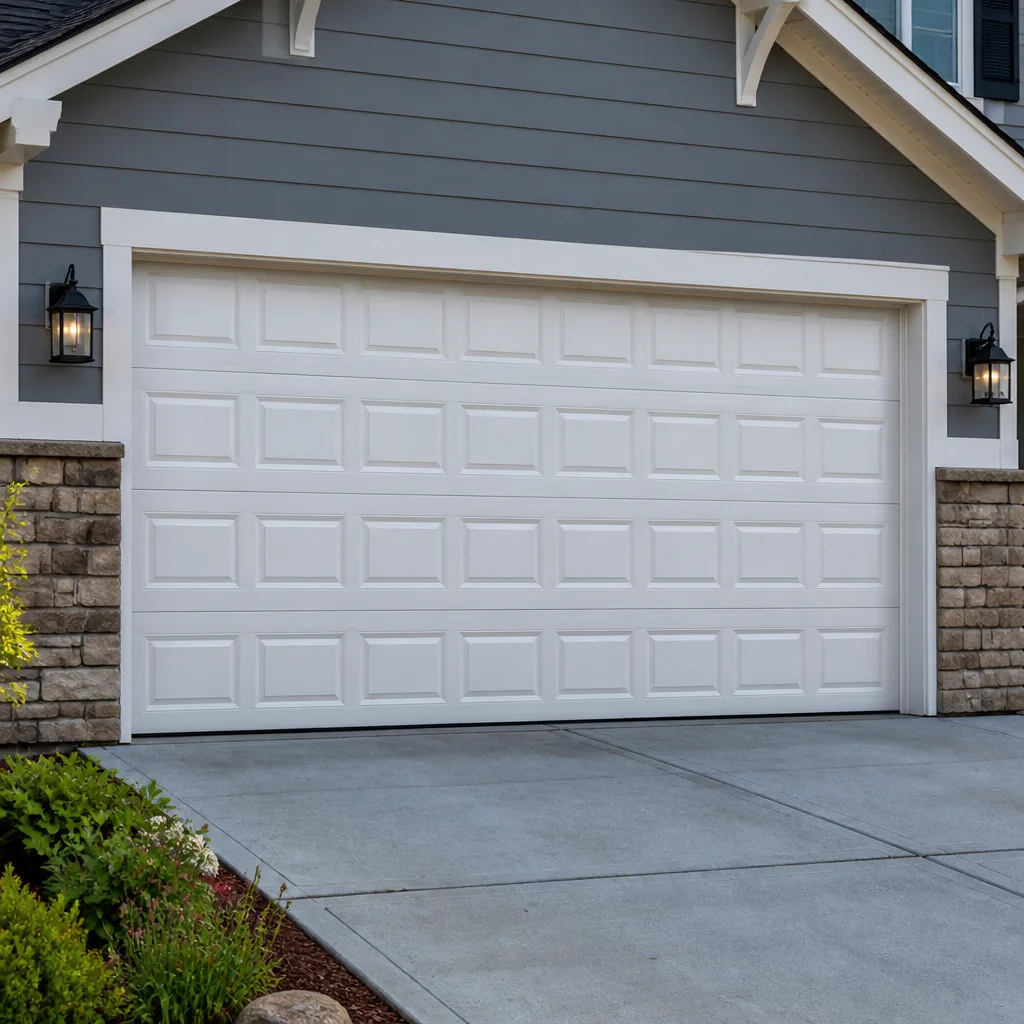 Raised-panel steel
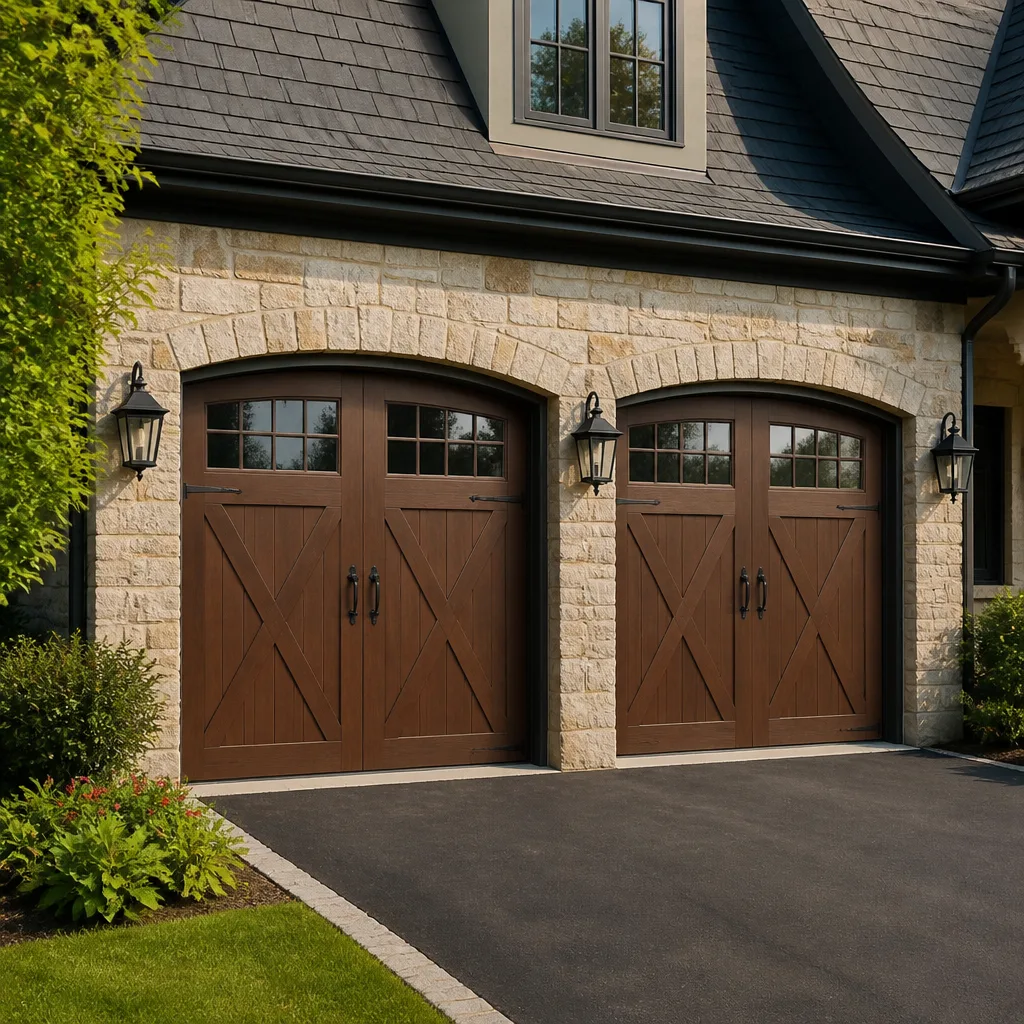 Carriage house
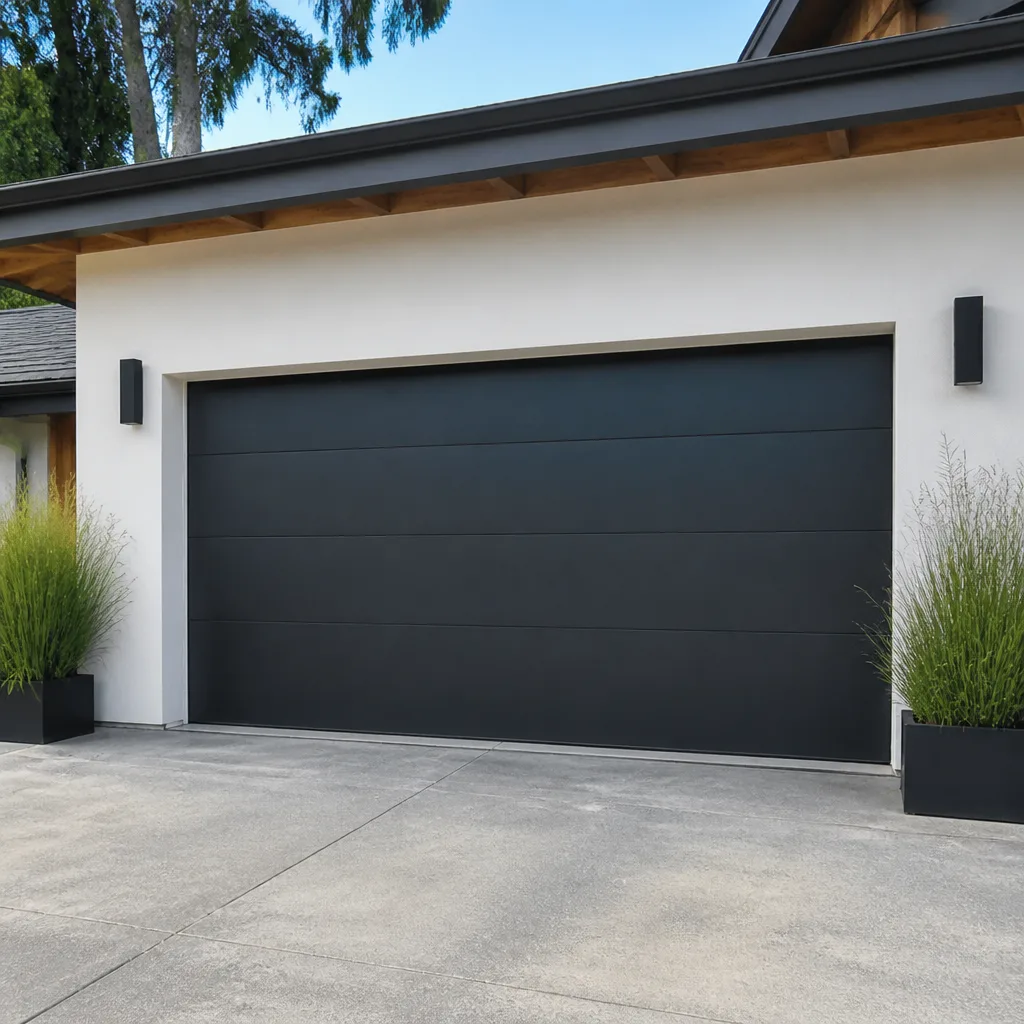 Modern flush
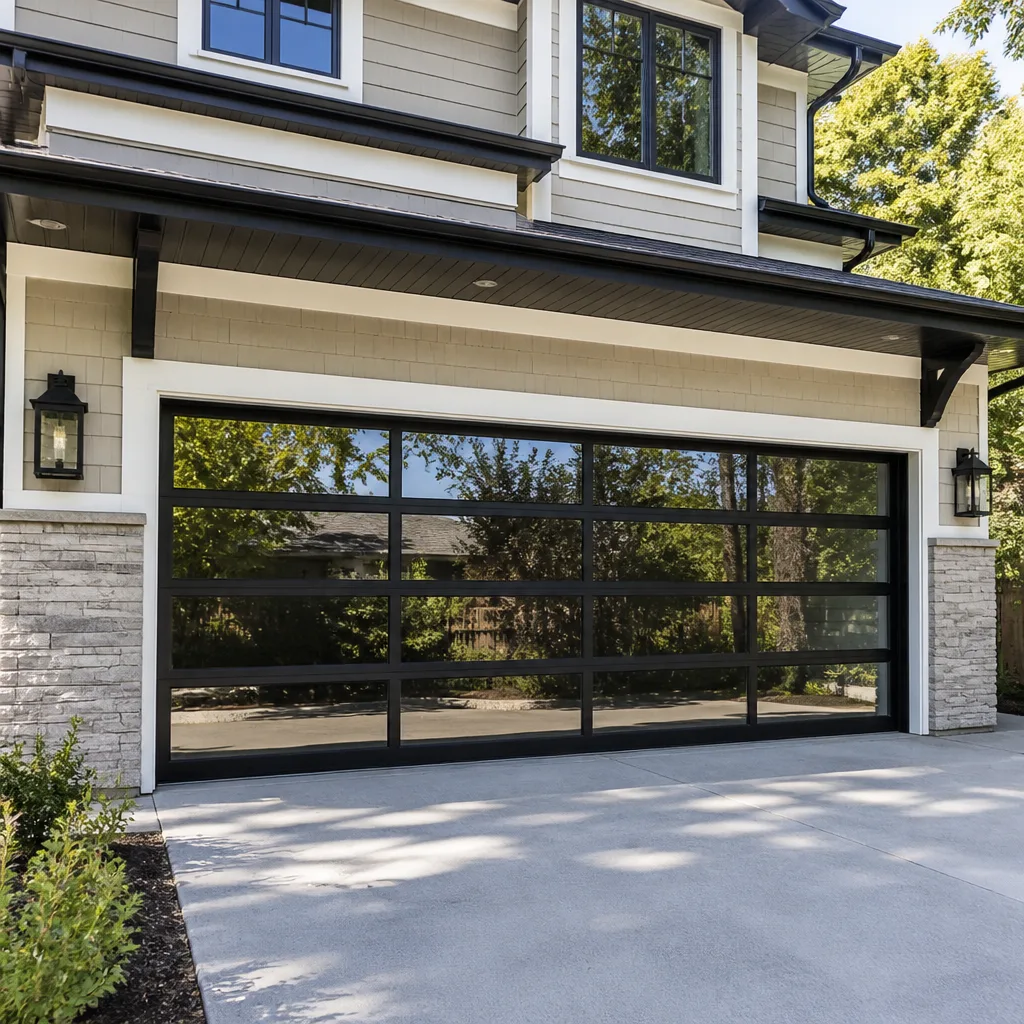 Full-view glass
 LiftMaster openers
 Chamberlain openers
Full 25-point door and opener safety check with every visit - springs, cables, rollers, tracks, and your LiftMaster or Chamberlain opener included
You get a price before we start. It does not change when the pro arrives.
Get your free estimateHow to Hire a Garage Door Contractor in Pembroke Pines: A Step-by-Step Guide
Most homeowners hire a garage door contractor the same way they hire a painter: someone knocks, quotes a number, finishes in an afternoon, and is never heard from again. That works fine until you try to sell the house and the inspector asks for the permit, or a hurricane comes through and your insurer asks for the wind-load paperwork on the door. In Pembroke Pines, the difference between a contractor and a qualified contractor often doesn’t show up for years. This guide walks you through license verification, wind-load ratings, insurance certificates, permit logic, and the red flags that separate a legitimate garage door professional from a guy with a truck and a low quote.
Quick Answer
To hire a garage door contractor in Pembroke Pines, verify a Florida State Certified or Registered contractor license through the state database, confirm the contractor carries general liability and workers’ compensation insurance, ask for the door’s Florida Product Approval number and design pressure rating before signing, and confirm who is pulling the permit. A legitimate contractor will provide all four without hesitation, in writing. A contractor who quotes only by phone, avoids the permit question, or can’t name the door’s FPA number is telling you exactly how the job will go.
Styles & brands we work with
- Raised-panel steel
- Carriage house
- Modern flush
- Full-view glass
- LiftMaster openers
- Chamberlain openers
Table of Contents
- Why Contractor Choice Matters More in Pembroke Pines
- The Step-by-Step Hiring Process
- How to Verify a Florida Contractor License
- Wind-Load Ratings and Florida Product Approval
- Reading the Insurance Certificate
- South Florida Red Flags
- Why the Lowest Bid Often Skips the Permit
- What to Check Before and After the Work
Why Contractor Choice Matters More in Pembroke Pines
A garage door is the largest moving object attached to a house and, in most South Florida homes, the largest single opening in the wind envelope. That second fact is where hiring decisions get expensive. Broward County’s building code treats garage doors as engineered components with specific design pressure requirements, not as generic hardware. When a door is installed without the correct product approval or without a permit, the failure doesn’t happen at install. It happens at resale, at inspection, or at the moment an adjuster reviews a claim after a storm.
The climate angle matters too. Pembroke Pines sits in a subtropical zone where heat and humidity are the constant, not the exception. That load shows up in specific, predictable ways: opener motors run hotter in an unconditioned garage, steel panels expand and contract through the year, and wood-look and composite doors take on moisture at seams if the finish isn’t maintained. A contractor who understands the local climate will recommend a door and an opener rated for sustained heat rather than a product spec sheet pulled from a cooler market.
The housing stock adds another layer. Communities across Pembroke Pines, from the older single-family blocks in the western neighborhoods to the townhome and gated communities closer to the coast, were built across several decades and several code eras. A door and opener combo that made sense on a 1990s build might need to be brought up to current wind-load standards on a modern replacement. In our experience, the homeowners who run into trouble are the ones who treated a garage door replacement like a cosmetic upgrade instead of a structural one.
The good news: getting this right is not complicated. It just requires knowing which four or five questions separate a legitimate Pembroke Pines garage door contractor from the alternative.
The Step-by-Step Hiring Process
Follow these steps in order. Each one should be completed before the next begins, and none of them should feel awkward or excessive to the contractor. If any step triggers pushback, that’s your answer.
- Define the job first. Before you call anyone, decide whether you’re hiring for garage door repair, opener service, spring replacement, or a full replacement. The job scope determines which license classification and permit rules apply.
- Get the license number in writing. Ask for the state license number on the estimate, not just on a business card. Then verify it yourself.
- Request the certificate of insurance. Ask for both general liability and workers’ compensation, and confirm both name the contractor’s legal business entity.
- Ask for the Florida Product Approval number. For any new door, this is non-negotiable. The FPA number and the design pressure rating should be on the proposal.
- Confirm who pulls the permit. The answer should be the licensed contractor, not the homeowner, and not “we’ll see if it’s needed.”
- Get a written, itemized estimate. Door, opener, hardware, labor, permit fees, and disposal, broken out separately.
- Ask what happens if the door fails the final inspection. The contractor should own that outcome, not deflect it.
- Check the work order against the quote before install day. Brand, model, size, and design pressure should all match what you agreed to.
Two of these steps (license verification and insurance confirmation) are covered in detail below. The brand step matters more than people think: technicians trained on garage door opener repair for a specific line, whether LiftMaster or Chamberlain, will diagnose faster than someone learning the system on the fly. That’s before any question of whether the quoted model actually matches what gets installed.
How to Verify a Florida Contractor License
This is the step where most Pembroke Pines homeowners skip the check, and it’s the most important. Florida does not license garage door work under a separate “garage door” category. What you’re looking for is either a Florida State Certified contractor (a statewide license that lets the holder work anywhere in the state) or a Florida State Registered contractor (a local license bound to a specific county or jurisdiction). Both are legitimate. Neither is the same as a local business tax receipt, which is a tax registration, not a professional credential.
That distinction matters. A business license (sometimes called an occupational license or business tax receipt) tells you the company is registered to do business in Pembroke Pines. It says nothing about whether the holder is qualified to install a wind-rated garage door or open high-tension springs. Any legitimate contractor knows the difference and will volunteer the state license number without being asked twice.
Here’s how to verify:
- Ask for the state license number and the exact business name it’s registered under.
- Look up the license through the Florida Department of Business and Professional Regulation (DBPR) license lookup.
- Confirm the license is active, not expired, suspended, or in a pending status.
- Confirm the business name on the DBPR record matches the name on your estimate and the name on the insurance certificate.
- Confirm the license classification covers the scope of the work: installation, alteration, and repair all fall under specific construction classifications.
If those three names (license, estimate, insurance) don’t line up, ask why. A mismatched insurance certificate is one of the clearest signals that the person quoting the job isn’t the person carrying the liability. And if the contractor is a company connecting you to a local professional, that’s fine; just confirm the local pro holds the license, because the license belongs to the individual or entity doing the work, not the platform.
Wind-Load Ratings and Florida Product Approval
Every garage door installed in Florida on a permitted residential job should carry a Florida Product Approval (FPA) number, and the door’s design pressure rating should be appropriate for your home’s location and exposure. This is not a marketing label. It’s a technical document filed with the state that specifies which door, at which size, at which design pressure, is allowed to be installed in which wind zone.
Pembroke Pines falls in the High Velocity Hurricane Zone (HVHZ) footprint requirements for most residential work in Broward County, and the design pressure your door needs depends on the building’s age, construction, and exposure category. A contractor who understands the local code will ask for your address and check the required design pressure before recommending a door. A contractor who doesn’t will quote you “a good garage door” and hand you a brochure.
Ask these questions before signing anything:
- “What is the Florida Product Approval number for the door you’re proposing?”
- “What design pressure is this door rated for, and what does my home require?”
- “Is the door being installed within the size limits of its approval?”
- “What impact protection does the door have, and how does it interact with the wind-load rating?”
- “Will you provide the FPA documentation with the final invoice?”
Any competent contractor should be able to answer all five without looking things up. If they can’t name the FPA number for the specific door they’re proposing, that’s not an inconvenience, it’s a red flag. That number is the difference between a door that’s engineered for the application and a door that merely fits the opening.
If you’re working through full garage door installation, this conversation should happen before the order is placed, not after. Once the door is on the truck, the risk of substituting a cheaper non-approved model goes up, not down.
Reading the Insurance Certificate
An insurance certificate (sometimes called a certificate of liability insurance or COI) is the document that proves a contractor carries coverage. In Florida, two types matter for garage door work: general liability and workers’ compensation. Both should be active at the time of the job, and both should list the contractor’s legal business entity as the insured.
Here’s what to actually look at on the certificate:
- Named insured. This should match the license holder and the name on your estimate. If it doesn’t, ask why.
- Policy effective and expiration dates. Confirm the job date falls inside the coverage window.
- General liability limits. The certificate lists per-occurrence and aggregate limits. Ask what those numbers are and whether they’re typical for the scope of work.
- Workers’ compensation. If the contractor has employees, this should be listed. If they claim to be exempt, ask for the exemption certificate.
- Certificate holder. Ask to be listed as a certificate holder on the policy, so you receive notice if the coverage lapses before the job is done.
If a contractor can’t produce a certificate within a day, treat that as a hard stop. Garage door work involves high-tension springs, electrical connections for the opener, and height work on ladders and lifts. Workers’ compensation exists because the trade is injury-prone, and a contractor who doesn’t carry it is either uninsured or exposed in a way that eventually lands on the homeowner.
South Florida Red Flags
Garage door contractors operate across a wide spectrum, and South Florida adds a few specific warning signs you won’t see in most hiring guides. Watch for these:
- Quoting only by phone. A legitimate contractor will want to see the door, the spring system, the opener, and the track before quoting. Phone-only quotes are a way to avoid liability for what’s actually there.
- Refusing to pull a permit. In Broward County, most garage door replacements require a permit. A contractor who says “we don’t need one” or “we’ll pull it after” is telling you they plan to skip it.
- Not knowing the FPA number. Every door installed in Florida should have one. A contractor who can’t name it doesn’t have it.
- Pushing a full replacement when repair is the right call. Brand-independent diagnosis matters here. A technician who only sells one line of doors will almost always find a reason to replace the door.
- No written scope. A verbal quote that “covers everything” doesn’t tell you what brand, model, or design pressure you’re getting.
- Cash-only, no receipt. There’s no paper trail, which means no permit, no inspection record, and no recourse if the door fails.
- No physical business address that matches the license. If the license points to one address and the contractor claims another, ask which is correct.
The common thread: any contractor who avoids paperwork is telling you something. The paperwork isn’t friction, it’s the safety net. A contractor who treats it that way is worth keeping.
Why the Lowest Bid Often Skips the Permit
Pembroke Pines homeowners get multiple quotes on a garage door project and, reasonably, compare the numbers. What the numbers don’t show on their face is what’s in them. A bid that skips the permit, skips the FPA documentation, and uses a non-rated door can come in dramatically lower than a legitimate bid without the contractor doing anything dishonest. They’re just not doing the same job.
Work backwards from the permit. A compliant job includes the permit application, the inspection, and the FPA documentation. A bid that’s missing the permit line item is a bid built to skip the permit. That’s the clearest single tell: the permit fee appears, or it doesn’t. If it doesn’t, ask where it is. The answer is usually “we’ll handle that later” or “you don’t need one for this.” Both answers mean the same thing.
The same logic applies to insurance and license. A contractor running without workers’ compensation is carrying less overhead than a contractor who carries it. That shows up in the quote. The savings are real on the day of the job; the cost shows up later, at inspection, at resale, or at the moment of a claim after a storm.
Compare the complete bids, not the bottom lines. A slightly higher quote that includes the permit, the FPA documentation, and the name of the licensed entity doing the work is often the cheaper option over the life of the door.
What to Check Before and After the Work
Verification doesn’t end when the contract is signed. Check these items before the work begins and again when it’s finished.
Before the job:
- Confirm the door, opener, and hardware models on the delivery match the written quote exactly.
- Confirm the design pressure rating and FPA number on the door match the proposal.
- Confirm the permit has been issued (not just applied for).
- Confirm the technician assigned to the job knows the brand you have.
After the job:
- Walk the full opening and listen for anything that rubs, squeals, or grinds.
- Test the safety reverse (both the mechanical and the photo-eye system).
- Test the manual release and confirm the door lifts cleanly by hand.
- Confirm the final inspection has been scheduled or signed off.
- Get the FPA documentation and warranty paperwork in your hands, not in a promise.
If any of those items don’t check out, escalate before the final payment, not after. The window where a contractor is motivated to fix something is before the payment clears, and any legitimate one will prefer to handle it then anyway.
Common Mistakes to Avoid
- Confusing a business tax receipt with a state license. A local business registration tells you the company exists in Pembroke Pines. It says nothing about whether the holder is licensed to work on garage doors.
- Skipping the FPA number conversation. In Broward County, the door you install should carry a Florida Product Approval. If your contractor can’t name it, they don’t have it.
- Accepting a phone-only quote on a wind-rated door. The door has to be right for the opening, the design pressure, and the size. That determination requires seeing the door.
- Assuming the lowest bid reflects the same work. Bids that don’t include the permit and inspection are bids that don’t include the work. Compare scope, not bottom lines.
- Letting a one-brand technician diagnose the door. A technician who only sells one line of doors is biased toward replacement. Brand-independent diagnosis matters.
- Not verifying that the permit was pulled before install day. By the time the door is up, “we’ll pull it after” becomes a promise nobody intends to keep.
- Missing the FPA documentation at final payment. Get the paperwork when the work is signed off, not weeks later in an email you have to chase.
See the difference
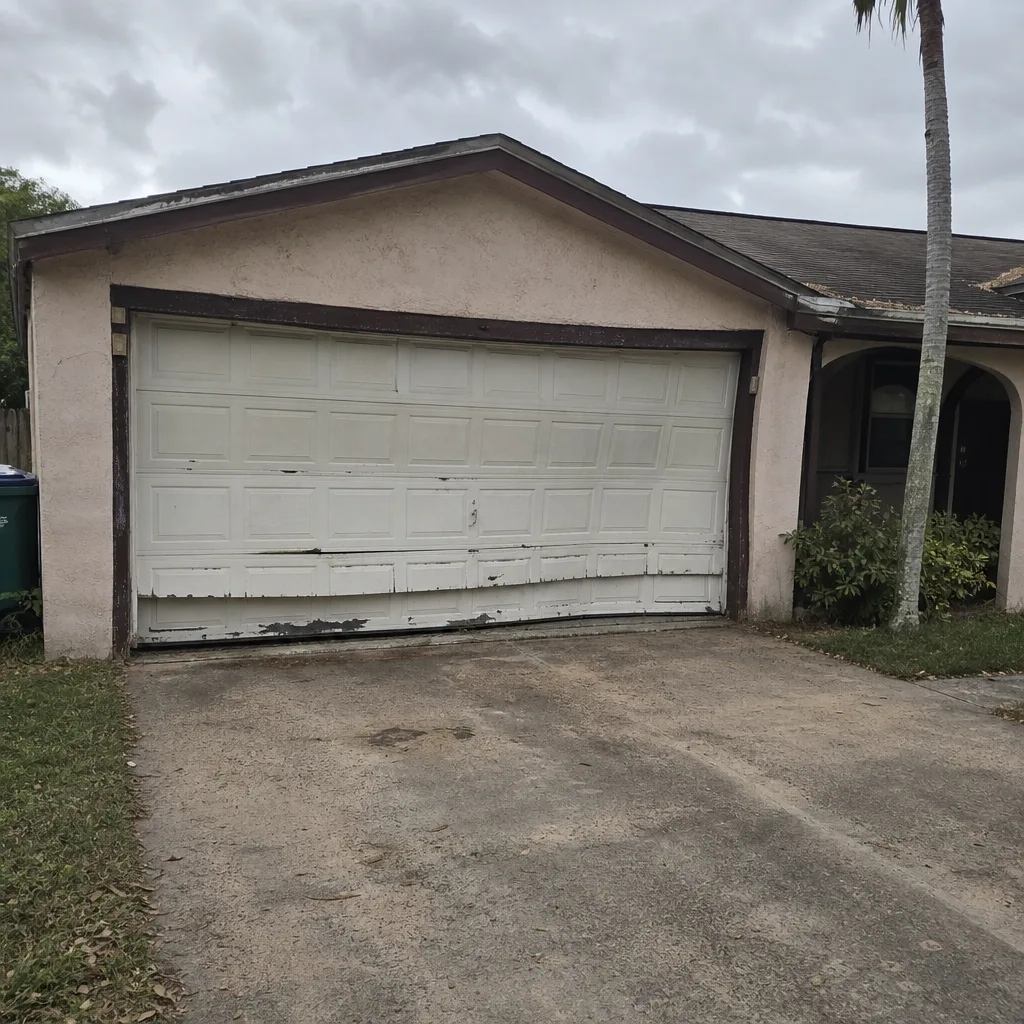 Before
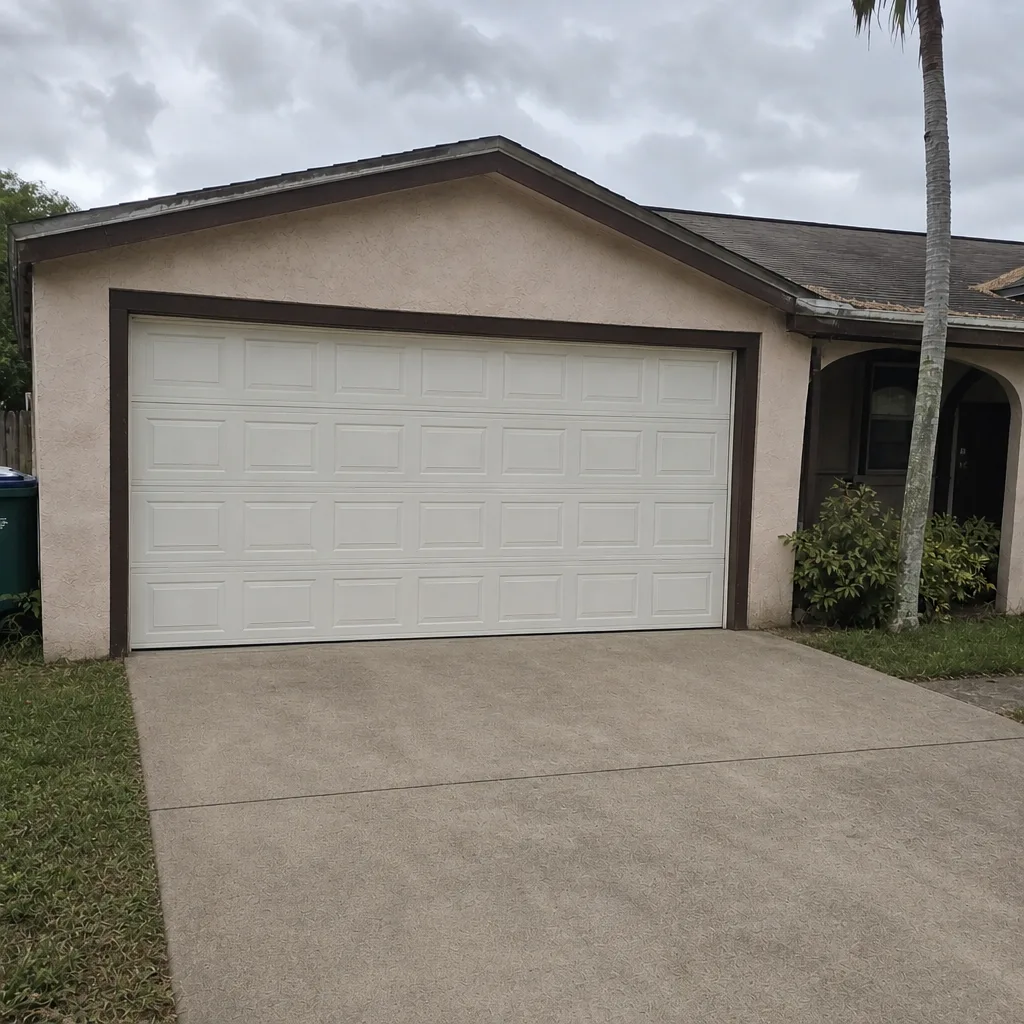 After
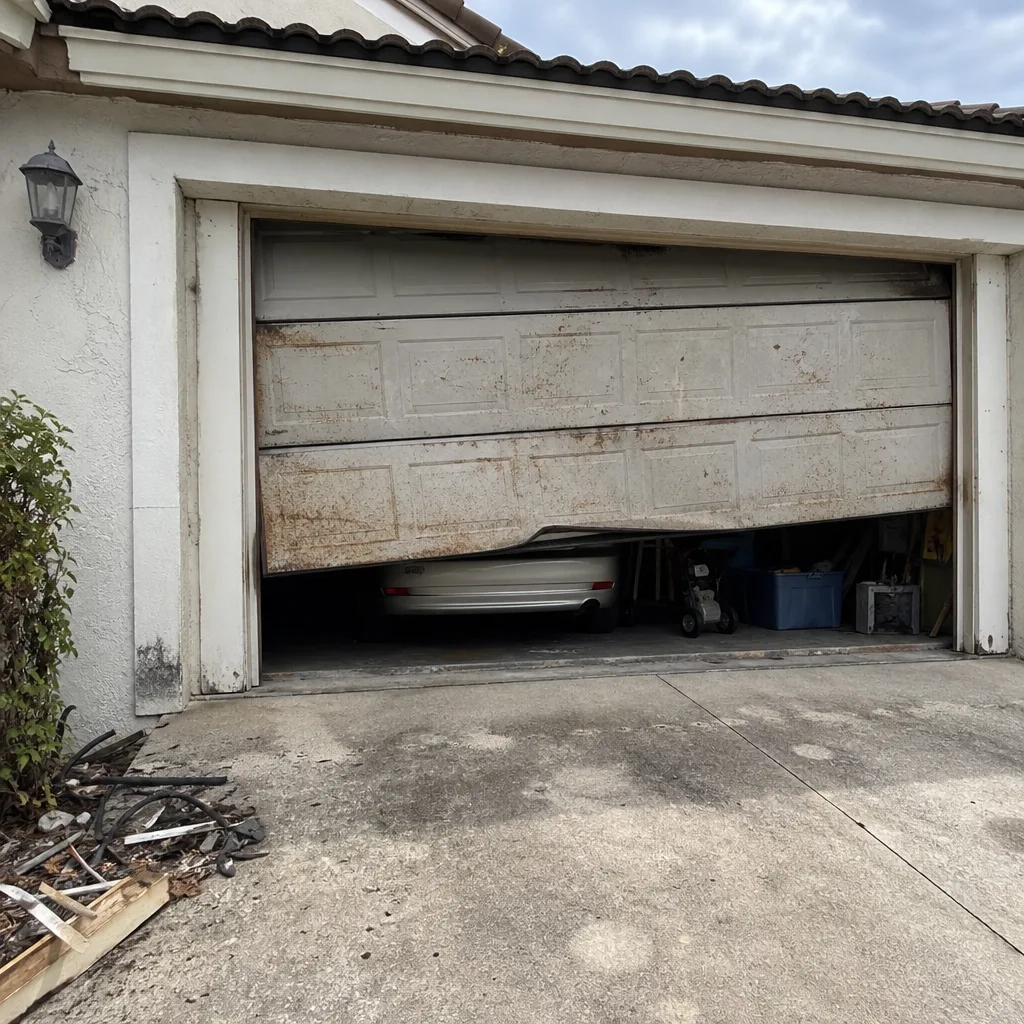 Before
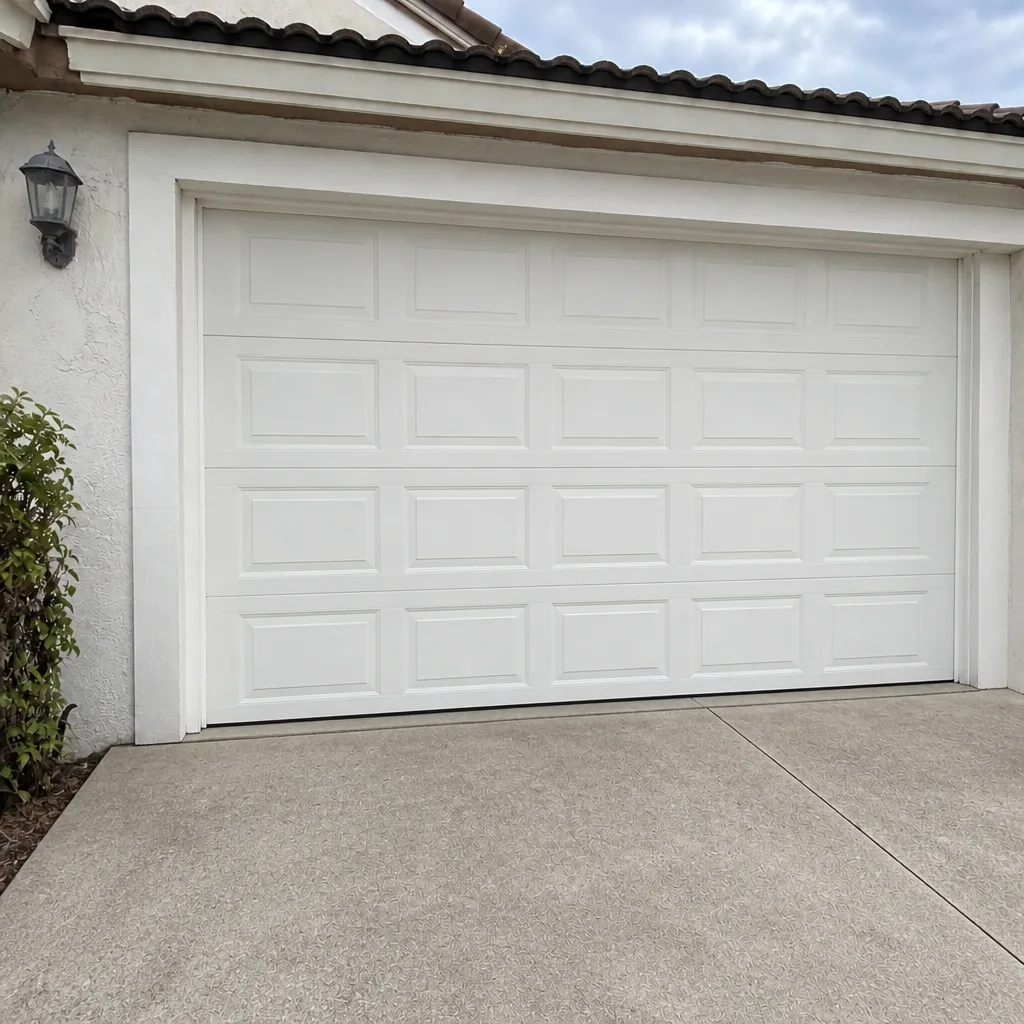 After
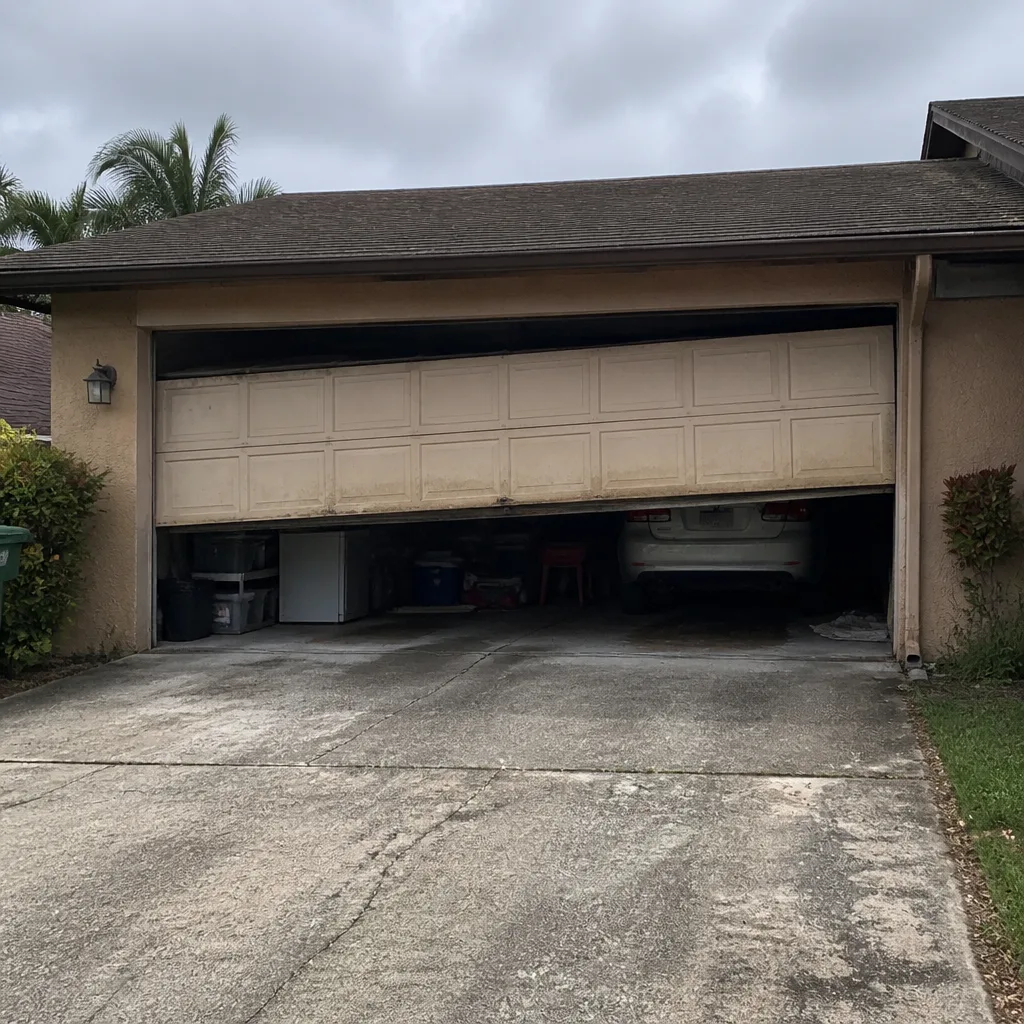 Before
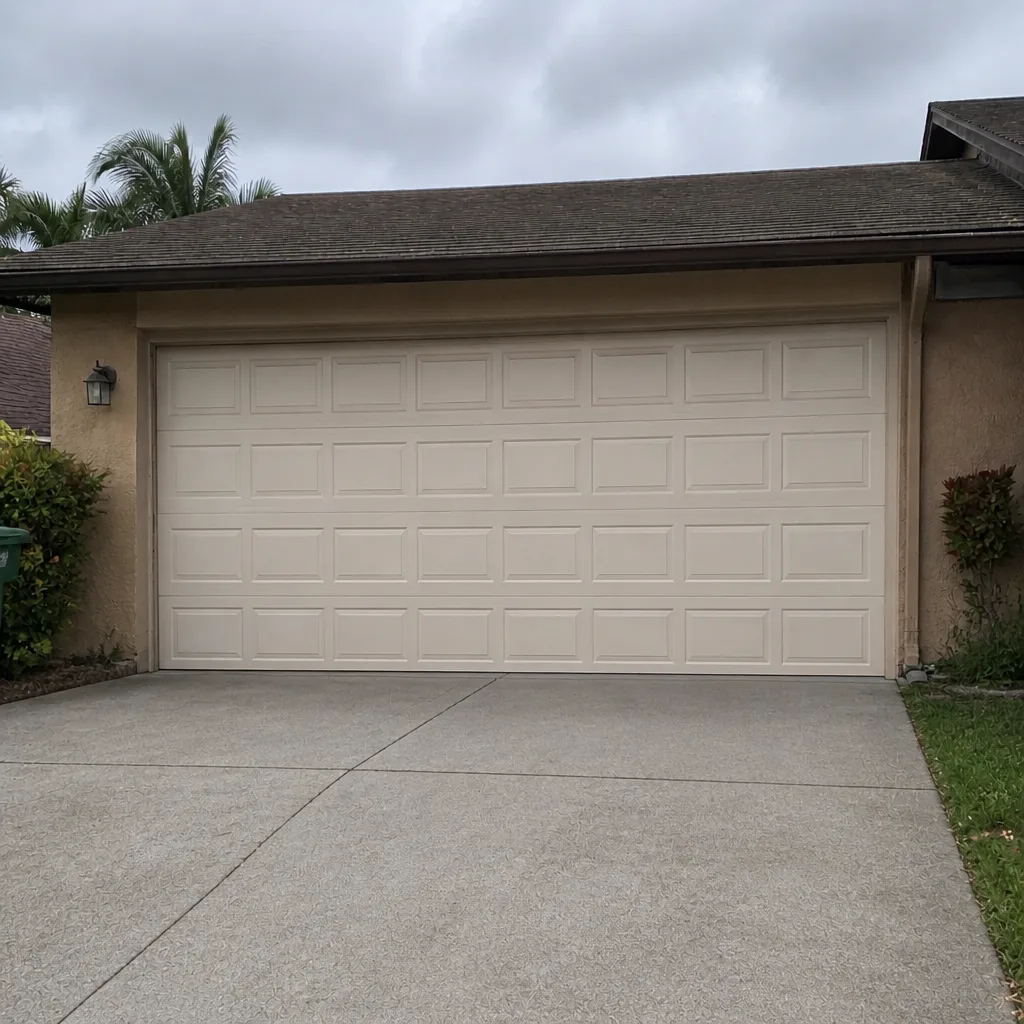 After
When to Call a Professional
Some garage door tasks are safe to handle yourself: wiping the track, tightening a loose bolt, replacing the wall-mounted remote battery. The moment the job involves torsion springs, cables, or the counterbalance system, stop. Those components hold dangerous tension and can cause serious injury if released without the right tools, training, and technique. Electrical work inside the opener, high-lift conversions, and anything that requires opening the roof or wall cavity around the door also belong with a trained technician. If you’re unsure which category a problem falls into, that’s already the signal: call. We offer free estimates in Pembroke Pines, and we’d rather walk you through whether it’s a ten-minute fix or a full replacement than have you find out the hard way. Call (844) 793-5158.
Frequently Asked Questions
Look up the contractor’s state license number through the Florida DBPR database and confirm the license is active and matches the business name on your estimate and insurance certificate. A local business tax receipt alone is not a professional license. If the license number, the insurance certificate name, and the estimate name don’t match, ask why before you sign anything.
In most cases, yes. Broward County and the City of Pembroke Pines require permits for garage door replacement because the door is a wind-rated structural component of the building envelope. The exact requirement depends on the scope and the home, so ask the city’s building department to confirm before scheduling the work. A legitimate contractor will expect to pull the permit and will build the fee into the written estimate.
A Florida Product Approval (FPA) is the state document that certifies a specific garage door model, at a specific size, is rated for a specific wind pressure. It matters because an unapproved door can fail a home inspection, complicate a sale, and can weaken an insurance claim after a storm. Ask for the FPA number before you sign, and ask for the documentation again at final payment. Estimates are free if you want to talk through what your door needs: call (844) 793-5158.
A properly equipped garage door contractor can handle all three. The job is a single system (door, springs, opener, track) and a contractor who splits them across subcontractors introduces coordination problems. When you hire for Pembroke Pines Garage Door Repair Pros level coverage, ask up front whether the same company handles repair and installation; if they can’t, you’re talking to a middleman. We handle repair, opener repair, spring repair, and complete installation under one call, so the diagnosis and the install don’t get split across two invoices and two warranty agreements.
Spring repair pricing depends on whether the door uses torsion or extension springs, whether one spring is failing or a matched pair is being replaced, and the size and weight of the door. A single spring replacement is typically priced as one unit, and a matched pair is usually quoted at roughly twice that because both springs are replaced together. The written estimate sets the final price, and we quote and agree the price before any work starts. Call (844) 793-5158 for an exact quote.
For repair calls, yes in most cases. Same-day service and emergency response for stuck or broken doors are part of what we do, including for urgent situations outside standard business hours. Installation and full replacement are measured, ordered, and scheduled, so the timeline reflects the door delivery rather than a dispatch window. Call (844) 793-5158 and we’ll tell you what’s realistic for your address and your door.
The local professionals we connect you with are licensed and insured as their state requires, and they carry the general liability and workers’ compensation coverage that a project of this scope needs. Ask for the certificate before the job starts and confirm the named insured matches the license and the estimate. That’s a normal request and any legitimate contractor will provide it without friction.
The Bottom Line
Hiring a garage door contractor in Pembroke Pines comes down to four documents: the state license, the insurance certificate, the Florida Product Approval number, and the permit. If a contractor can produce all four without hesitation, you’re most of the way to a safe, insurable job. If they can’t, no quote is low enough to make up the difference. Our technicians have up to 15 years of experience and are familiar with LiftMaster, Chamberlain, Craftsman, Raynor, and four other major brands, and we handle everything from a snapped spring to a full replacement under one call.
Call (844) 793-5158 for a free estimate. We’ll walk through the license, the insurance, the FPA number, and the permit in the same conversation, and we’ll quote and agree the price before any work starts.
Written by the team at Pembroke Pines Garage Door Repair Pros.