Last updated November 22, 2026
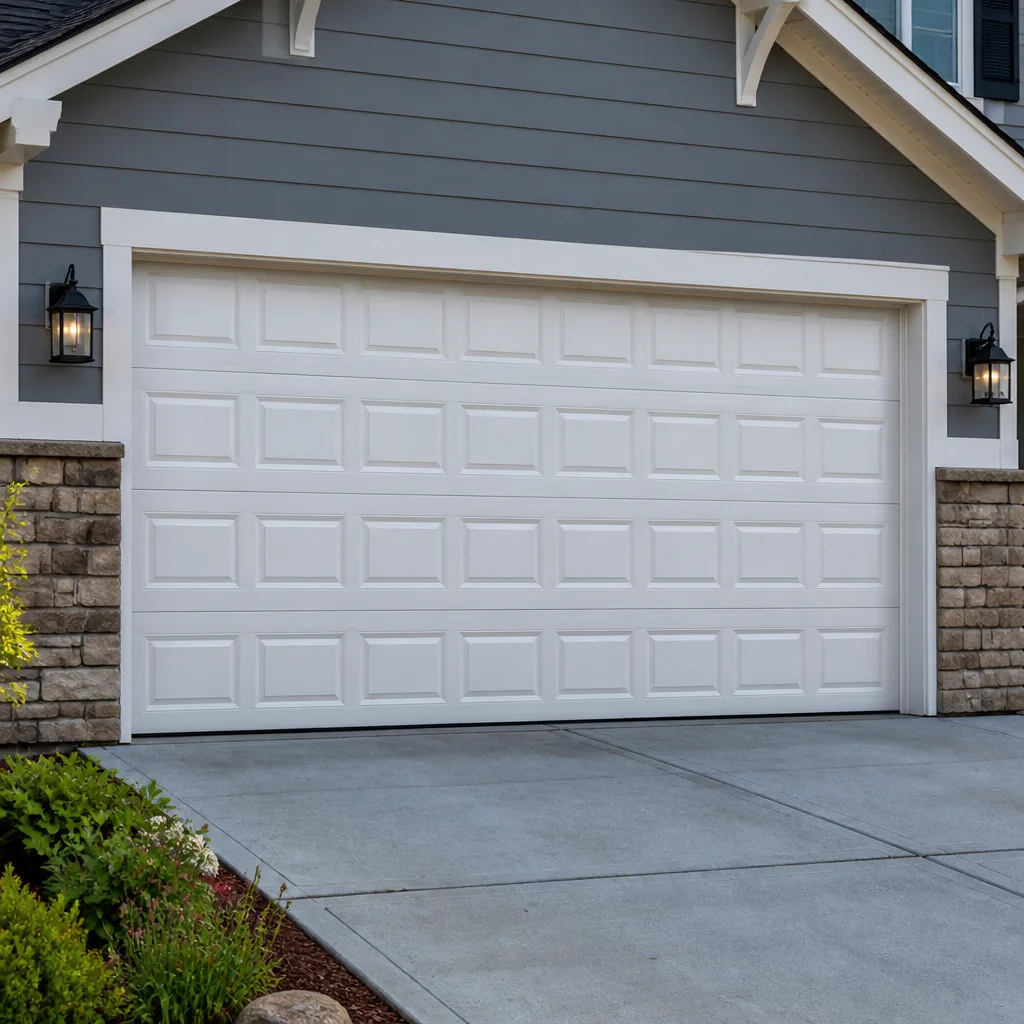 Raised-panel steel
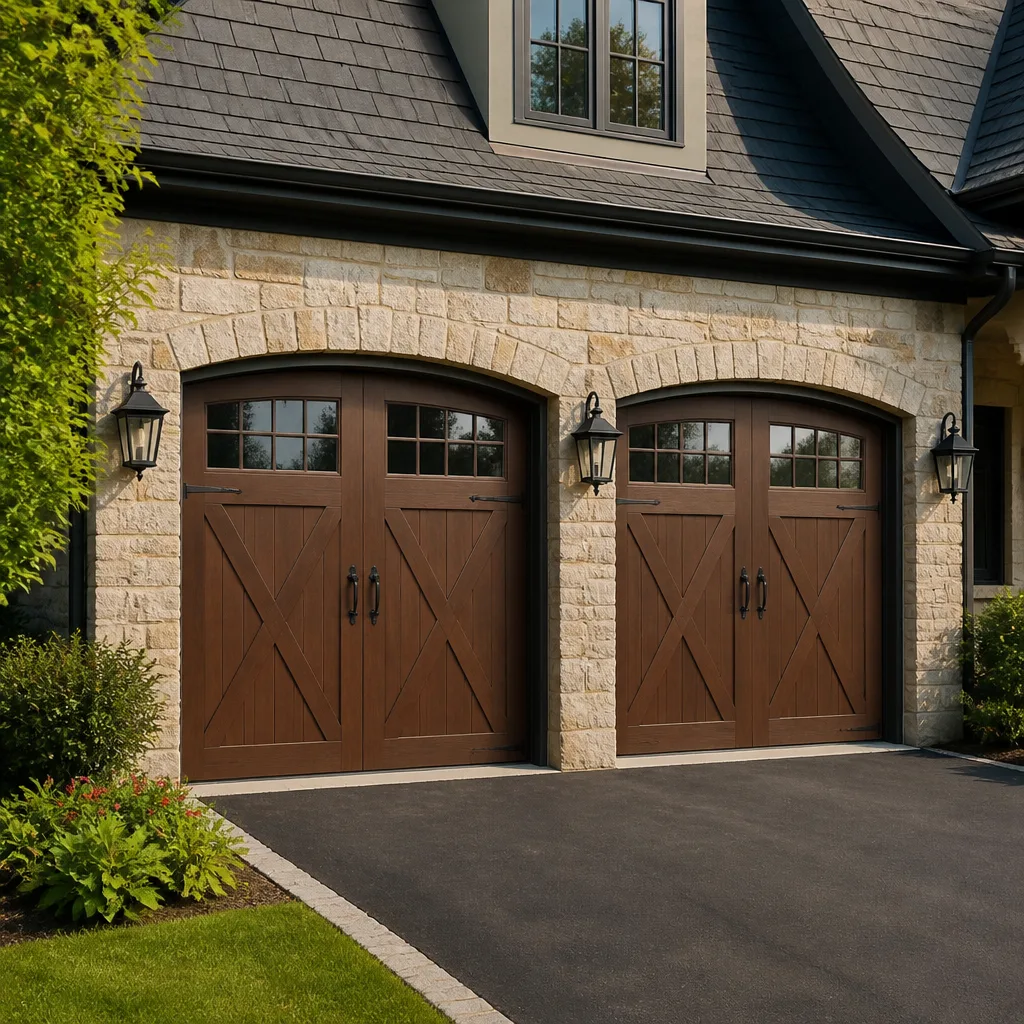 Carriage house
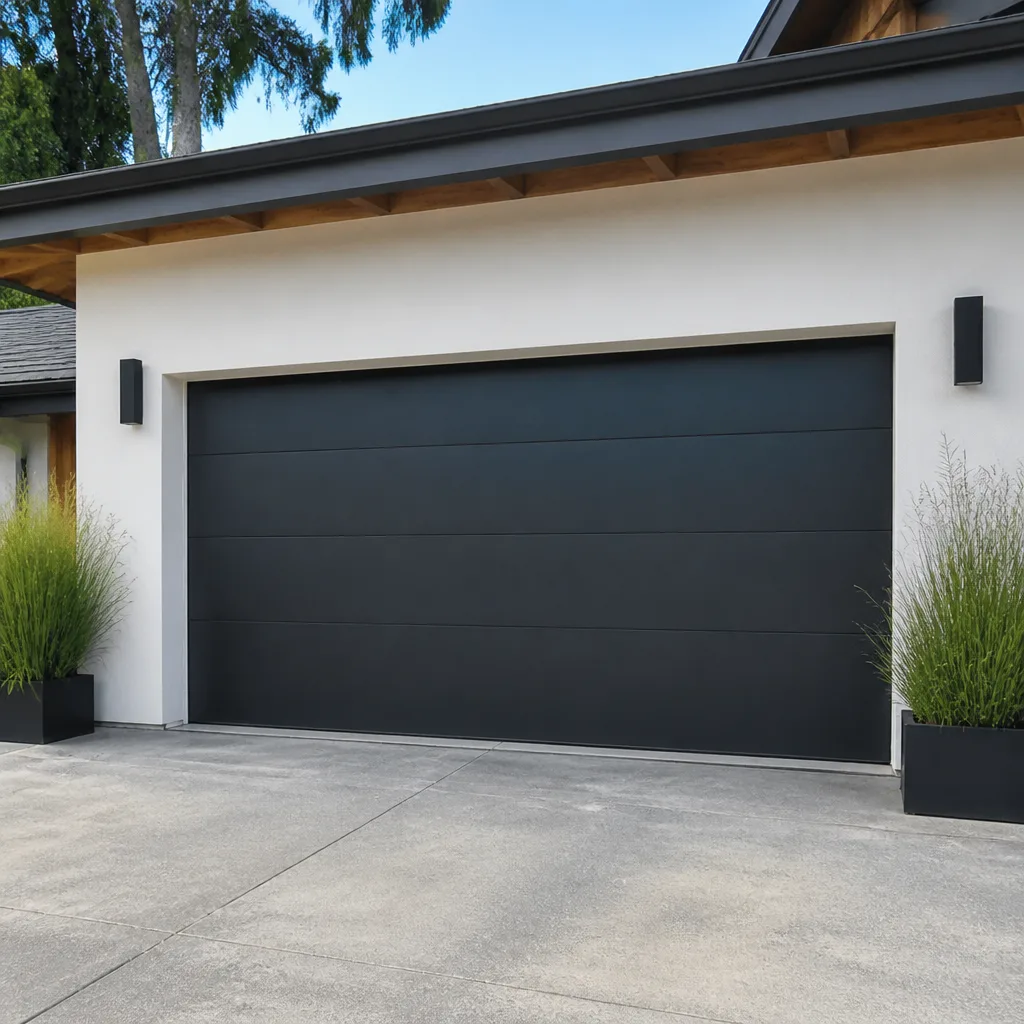 Modern flush
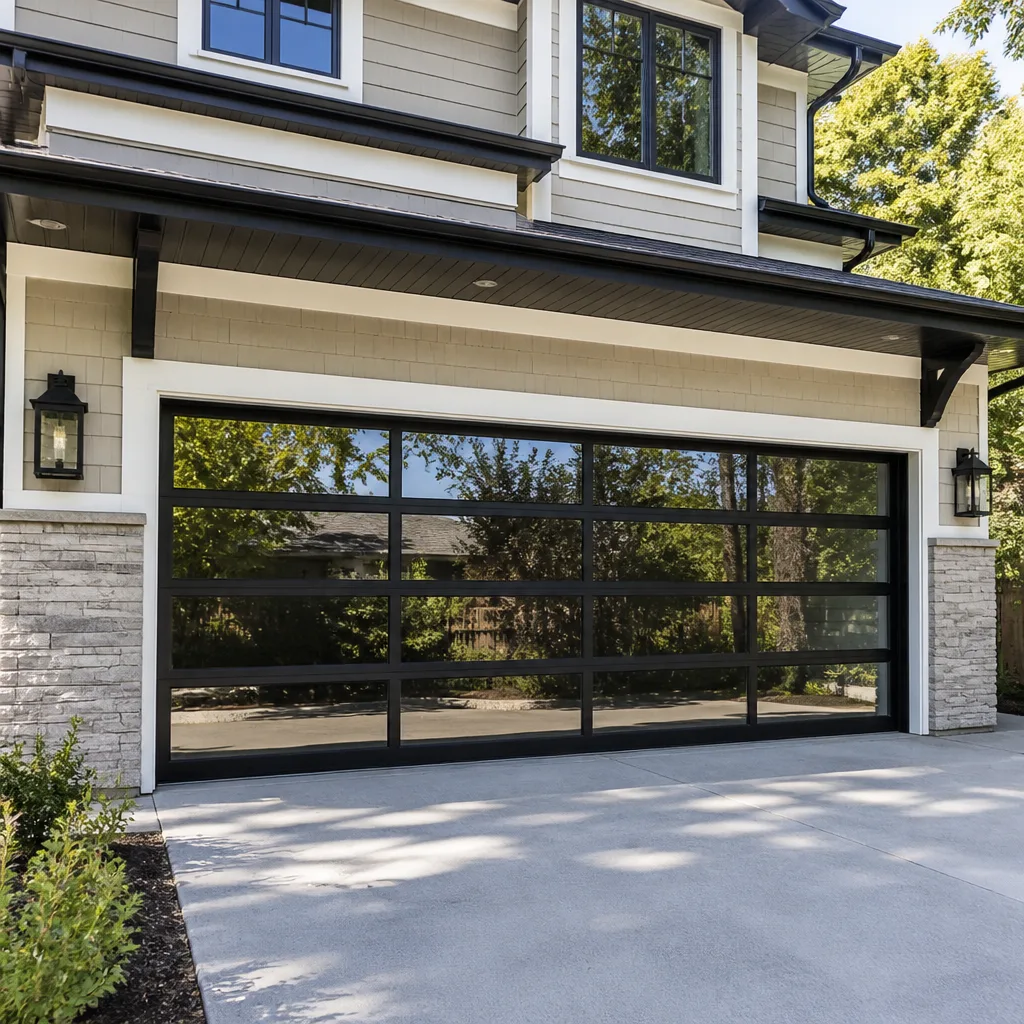 Full-view glass
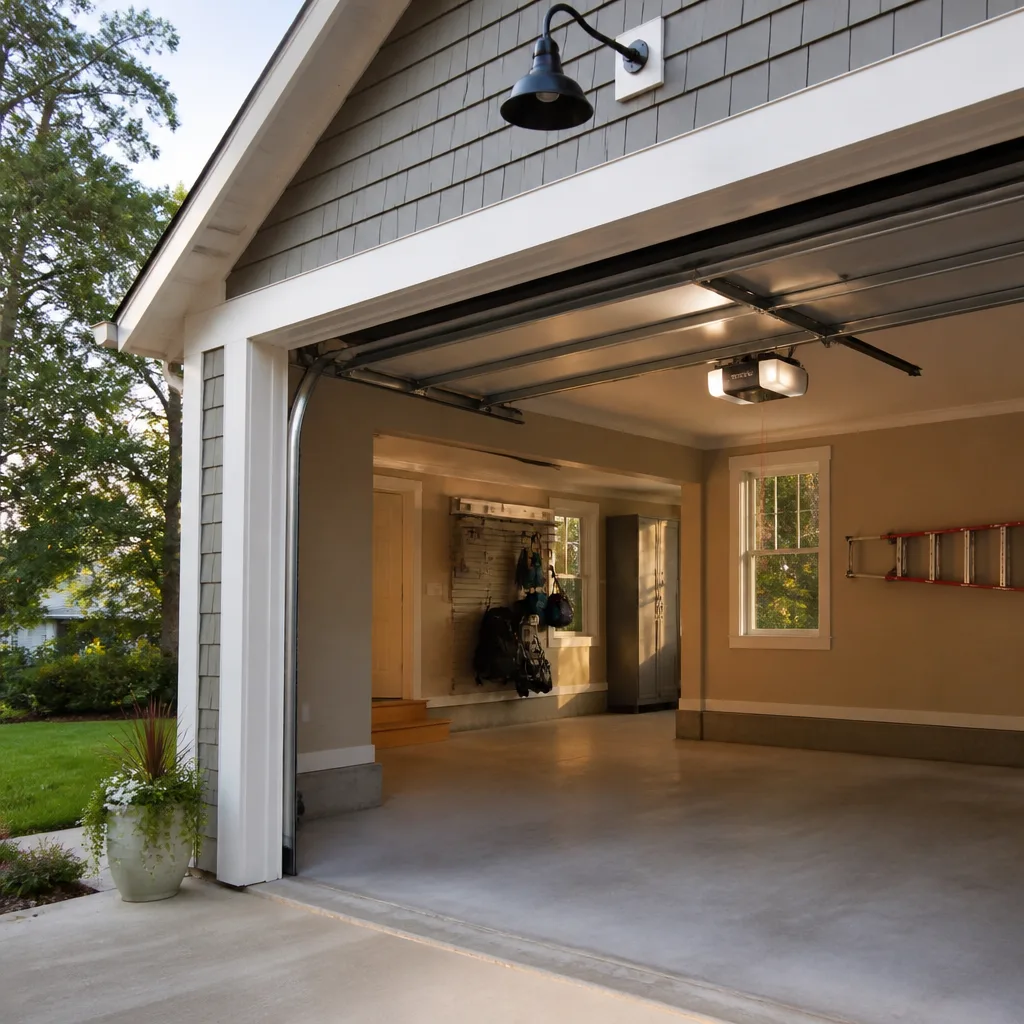 LiftMaster openers
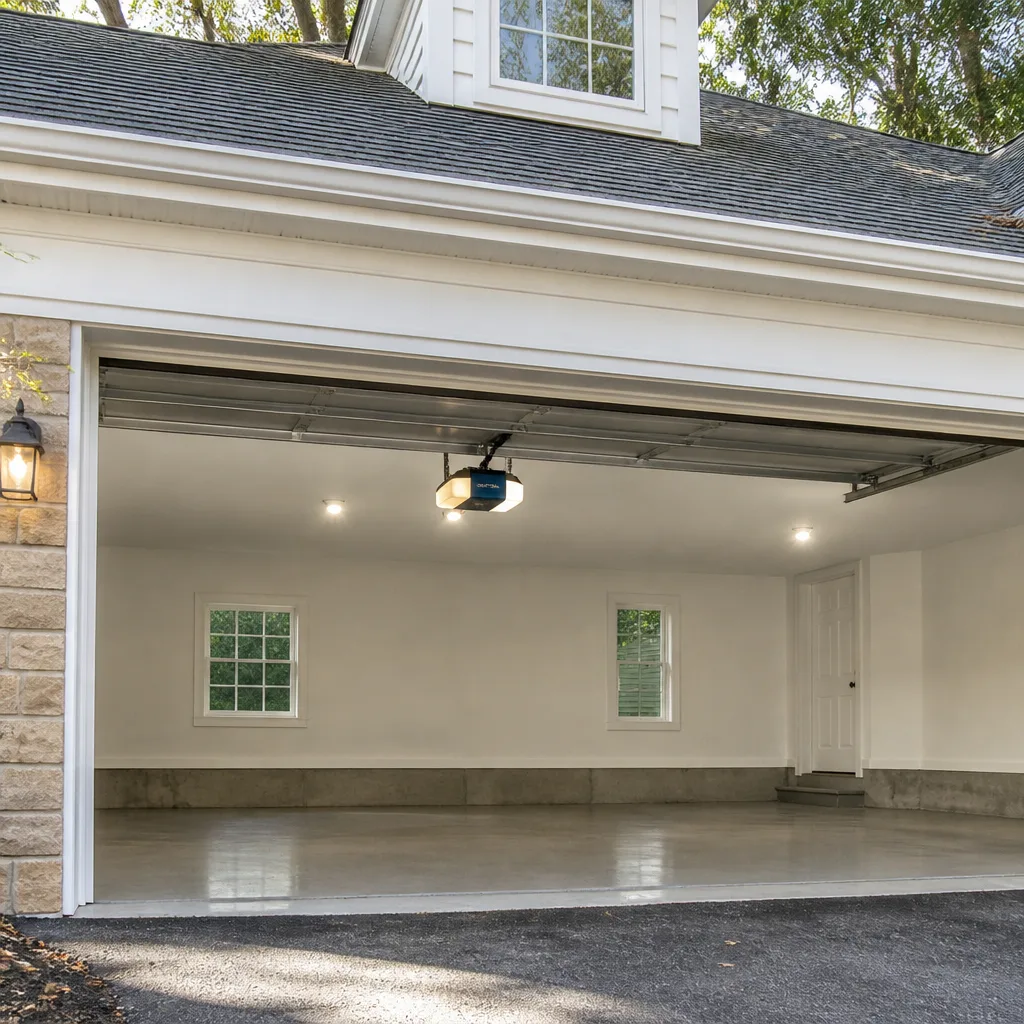 Chamberlain openers
Full 25-point door and opener safety check with every visit - springs, cables, rollers, tracks, and your LiftMaster or Chamberlain opener included
You get a price before we start. It does not change when the pro arrives.
Get your free estimateThe Complete Guide to Garage Doors in Pembroke Pines
Most garage door advice on the internet was written for a climate that doesn’t exist here. It assumes a door that faces a dry freeze, a short storm season, and a building department that rubber-stamps whatever a national retailer installs. Pembroke Pines sits inside Broward County’s High-Velocity Hurricane Zone, and that single fact reshapes which doors you’re allowed to buy, which openers survive the humidity, and why cheap spring steel quietly gives out ahead of schedule. This guide is built for that reality: how Florida wind-load rules affect your choices, what our technicians have learned about corrosion and hardware in South Florida, how HOA approval actually works in communities like Chapel Trail and Pembroke Falls, and where the big-box shortcuts leave homeowners holding the bill. You’ll finish knowing exactly what to ask before anyone touches your door in Pembroke Pines.
Quick Answer
The most important garage door decision in Pembroke Pines is compliance, not style. Any replacement door must meet the wind-load requirements of the Florida Building Code, Chapter 16 for the High-Velocity Hurricane Zone, which means a rated door installed with the correct anchorage – not simply a heavy-looking one. After that, the choice comes down to opener quality, spring and cable maintenance for humidity, and HOA design approval in master-planned communities. Get those four things right and the rest is details.
Styles & brands we work with
- Raised-panel steel
- Carriage house
- Modern flush
- Full-view glass
- LiftMaster openers
- Chamberlain openers
Table of Contents
- Why Pembroke Pines Garage Doors Are Different From the National Playbook
- Florida Building Code Chapter 16: What Wind Load Actually Requires
- Storm-Rated vs. Wind-Load-Compliant: They Are Not the Same Door
- Humidity and Salt-Air Corrosion: Why Your Springs Fail Early
- Choosing an Opener: LiftMaster, Chamberlain, Craftsman, and What Actually Lasts
- HOA Approval in Chapel Trail, Pembroke Falls, and Similar Communities
- Permits and Liability: The Step Big-Box Installers Skip
- Yearly Maintenance That South Florida Demands
Why Pembroke Pines Garage Doors Are Different From the National Playbook
A garage door in Pembroke Pines is under a different set of stresses than a door in the Midwest. The climate is warm and humid for most of the year, the storm exposure is serious, and the building code is stricter than the one most installation guides assume. That means the generic advice – “buy a steel door, replace your springs every decade, keep it lubricated” – is directionally fine and specifically wrong in the ways that matter.
We work on doors across Pembroke Pines in neighborhoods from Chapel Trail and Pembroke Falls to Silver Lakes and Weston-adjacent sections of the city, and the same pattern repeats. Doors that get a proper installation and a modest maintenance routine last. Doors that skip a permit, use the wrong anchors, or rely on an opener chosen by price alone don’t. In our experience, the underlying cause is almost always installation and specification, not the brand on the packaging.
A few things this guide will make clear:
- The code requirement for wind load is not the same as a “storm-rated” sticker, and confusing the two is a common and expensive mistake.
- Humidity and airborne salt drive corrosion of springs and cables faster than the manufacturer’s maintenance interval suggests.
- HOA design rules in Pembroke Pines communities can block an otherwise compliant door before it’s ever ordered.
- A permit is not bureaucracy. It’s what protects your liability if the door ever fails.
- Brand compatibility matters. A technician who already knows your LiftMaster, Raynor, or Craftsman system doesn’t have to learn it on your driveway.
Read the rest of this guide as a decision map. Read it before you call anyone, and you’ll ask better questions. That’s the point.
Florida Building Code Chapter 16: What Wind Load Actually Requires
Florida Building Code Chapter 16 sets wind-load requirements for structures across the state, and Broward County sits inside the High-Velocity Hurricane Zone – the most demanding wind region in the code. If you replace a garage door in Pembroke Pines, the door has to be rated for the design pressure at your home’s location, and it has to be installed with a mounting and anchorage method that the manufacturer has tested. A door that meets the rating on paper but is bolted to a weakened jamb does not meet the requirement in practice.
Here’s how the requirement actually plays out when you’re buying a door:
- The door carries a design pressure rating. The manufacturer publishes the rating for each model and each size. The installer matches it to the demand at your address.
- Installation details are part of the rating. Wind-load ratings are tested with specific anchors, fasteners, and jamb conditions. Change the anchors and the rating no longer applies.
- Reinforcement is often required. Many compliant doors use vertical struts, heavier-gauge tracks, and extra hinges or brackets to reach the design pressure. These aren’t upgrades you can skip.
- The permit ties it together. The building department reviews the wind-load calculation along with the product approval. Skipping the permit removes the only outside check on that match.
When we quote a door for Pembroke Pines, the wind-load requirement is baked into the price, not added later. That’s also why a “cheap” replacement from a national retailer often comes back looking expensive once a homeowner has to bring it into compliance after the fact. If you’re unsure what your home requires, ask your city’s building department before you order anything.
Storm-Rated vs. Wind-Load-Compliant: They Are Not the Same Door
“Storm-rated” is a marketing phrase. “Wind-load-compliant” is a technical claim tied to a product approval and an installation method. They can describe the same door, but they don’t have to, and treating them as synonyms is one of the most common and costly mistakes we see in Pembroke Pines.
A door is wind-load-compliant when three things line up:
- The product approval matches your design pressure. Florida product approvals list the pressures the door has been tested to withstand, and the installer must match the demand at your home to the published rating.
- The installation matches the tested method. Anchorage, struts, and reinforcement all come from the manufacturer’s published installation instructions for that rating.
- The permit record confirms both. Without a permit, there’s no independent record that the match was made correctly.
“Storm-rated” by itself proves none of those. A door can be called storm-rated in marketing material and still be wrong for your address. It can also be perfectly compliant but undersized for the actual load your home experiences at the corner of a two-story wall facing open ground. The only reliable check is the product approval plus the wind-load calculation plus the installation instructions.
We’ve also seen the reverse problem. A homeowner buys a compliant door from a retailer, then has it installed with standard anchors because that’s what came with the box. The box is not the installation. If you want a straightforward garage door installation in Pembroke Pines that holds up to code review, the paperwork and the anchors matter as much as the panels.
Humidity and Salt-Air Corrosion: Why Your Springs Fail Early
Manufacturer maintenance schedules assume a temperate climate with moderate humidity. Pembroke Pines is neither. The air carries moisture most of the year, and the city’s position near the coast means the atmosphere regularly carries salt-laden particles inland on the sea breeze. Springs and cables are thin, high-tension steel parts with a protective coating that doesn’t get touched often. That combination is exactly what corrosion attacks first.
What we see when we inspect doors in Pembroke Pines:
- Surface rust on torsion springs – usually harmless at first, but the pitting underneath is what weakens the spring.
- Cable fraying along the drum and lift cable, often visible as a single broken strand before the cable fails.
- Roller flat-spotting and bearing corrosion, which makes the door noisy and puts extra strain on the opener.
- Hinge and bracket pitting that eventually loosens the fastener holding part of the door.
Our rule of thumb in South Florida: don’t wait for the manufacturer’s published interval. Have the moving parts inspected once a year and lubricated with a proper garage door lubricant. If your door is more than a few years old and you’ve never had it inspected, this is the single highest-value maintenance step you can take. Springs and cables are the dangerous parts of a garage door, and we strongly recommend a trained technician handle them rather than a homeowner.
A related note on safety: a snapped torsion spring or a frayed lift cable can release significant stored energy. Never attempt to adjust, remove, or replace either. Call a trained professional. If your door is misbehaving now and you want a fast assessment, our technicians handle garage door repair with same-day availability when scheduling allows.
Choosing an Opener: LiftMaster, Chamberlain, Craftsman, and What Actually Lasts
The opener is the part of the system most often replaced by the previous owner, least often understood, and most frequently oversold. In Pembroke Pines, the right choice comes down to three things: brand compatibility with what’s already in the garage, a drive system that fits your door’s weight, and safety features that actually work when the door meets an obstacle.
Here’s a practical way to think about the common openers we service:
- LiftMaster – broad parts availability and strong dealer support; a common choice for heavier or larger doors and for WiFi-connected systems.
- Chamberlain – the same underlying drive technology as LiftMaster, widely installed in South Florida homes, with good DIY-friendly setup on newer units.
- Craftsman – a familiar brand in many Pembroke Pines garages and very serviceable; parts are usually available, and repairs are often straightforward.
- Raynor – solid, less common in residential than the others, but no problem for a technician who knows the system going in.
We work on all four of those brands, plus Genie, Clopay, Amarr, and Wayne Dalton doors. The point isn’t which brand is “best.” It’s that a technician who already knows your system arrives prepared instead of diagnosing from scratch on your driveway. If your opener is failing intermittently, or the wall control only works sometimes, that’s usually a garage door opener repair issue and not a sign the whole door needs replacing. For a forced-entry check or a jammed door, our team handles the diagnosis and gives you a written price before work begins.
HOA Approval in Chapel Trail, Pembroke Falls, and Similar Communities
If you live in one of Pembroke Pines’ master-planned communities – Chapel Trail, Pembroke Falls, and similar HOA-governed neighborhoods – the door you want may need approval before you order it. HOA architectural review is separate from the building permit. A door can pass the county’s wind-load review and still be rejected by the community’s architectural committee because it doesn’t match the palette or style rules for the street.
The approval process usually runs in this order:
- Read your community’s architectural guidelines first. Most specify acceptable door styles, panel patterns, colors, and hardware finishes. Many also require matching the surrounding doors on the street.
- Submit an architectural review request with product data, color chips, and the manufacturer’s spec sheet. Your community’s management office will tell you exactly what to include.
- Wait for written approval before ordering. Verbal approval from a board member is not the same as a signed architectural approval.
- Keep the approval and the permit together. Both belong in the file you keep for the work.
We’ve seen homeowners in Pembroke Pines order a door, have it delivered, and then discover their HOA won’t approve the color. The door is compliant and fine; it just isn’t allowed on that street. Reading the architectural guidelines before you order saves you the return shipping and the delay. If you’re not sure what your community permits, call your management office before you call anyone else.
Permits and Liability: The Step Big-Box Installers Skip
A garage door replacement in Pembroke Pines usually requires a permit, because the door is part of the building’s wind-load envelope. The permit is not a technicality. It’s the record that ties your door’s product approval to your home’s design pressure and to the installation method. Without it, you’re exposed in three ways.
- Compliance exposure. If the door fails inspection later or the home is sold, the work may need to be redone to comply.
- Liability exposure. If the door fails in a storm or injures someone, the paper trail is the first thing anyone asks for.
- Insurance exposure. Many policies expect permitted work on structural envelope elements, and unpermitted work can complicate a claim.
Big-box retailers don’t typically pull permits for the homeowner. Their installers show up with the door and the anchors that came in the box, and the homeowner is left to handle the paperwork. That’s a real gap and it isn’t always clear until months later. If you’re working with a national retailer, ask in writing who pulls the permit, what product approval is being used, and what happens if the inspection fails.
When we schedule a job in Pembroke Pines, the permit question is part of the conversation before the work is scheduled. If you’re comparing quotes, ask every installer the same question. It’s the fastest way to tell who’s been through a Broward County inspection.
Yearly Maintenance That South Florida Demands
A yearly maintenance visit on a Pembroke Pines garage door is not cosmetic. It’s how you catch the corrosion and wear that the manufacturer’s schedule doesn’t budget for in this climate. A short annual routine extends the life of springs, cables, and the opener, and it’s how most premature failures get avoided.
What a proper annual visit covers:
- Spring inspection for surface rust, pitting, and any sign of fatigue at the coils.
- Cable inspection along the full run, looking for fraying, kinks, or single broken strands.
- Roller and hinge lubrication with a garage door lubricant, not general-purpose oil or WD-40.
- Track alignment and fastener check – especially at the jamb, where wind-load anchorage matters.
- Opener force and safety-reverse test to confirm the door reverses on contact and the photo-eye works.
- Balance test with the opener disconnected, to confirm the springs still carry the door’s weight properly.
- Weather seal and bottom-rubber check, which matters more in a humid climate than most homeowners realize.
One small habit pays off between visits: wipe the springs and hinges with a light coat of lubricant once a season, and keep an eye out for the first spots of rust. Don’t touch the springs themselves beyond that. If you see a broken spring or a cable starting to fray, call a professional. That’s the one part of this maintenance you shouldn’t do yourself.
Common Mistakes to Avoid
- Buying a “storm-rated” door without checking the product approval. Storm-rated is marketing. Product approval plus a wind-load calculation plus the correct anchors is what meets Florida Building Code Chapter 16. Ask for the paperwork before you sign.
- Letting the retailer handle the permit – or not asking who does. Big-box installers routinely skip the permit. If nobody pulls it, the compliance record doesn’t exist, and you’re the one exposed.
- Ordering an HOA-regulated door before approval. In Chapel Trail, Pembroke Falls, and similar Pembroke Pines communities, the architectural committee can reject a compliant door after it’s delivered. Get written approval first.
- Following the manufacturer’s maintenance schedule to the letter. South Florida’s humidity and salt-laden air push corrosion faster. A yearly inspection beats the generic interval every time.
- Replacing the whole door when only the opener is failing. Intermittent opener behavior, wall-control glitches, and reversed limits are usually a serviceable repair, not a replacement signal.
- Attempting spring or cable work yourself. Torsion springs and lift cables store enough energy to cause serious injury. This is the one part of the door a trained technician should always handle.
- Choosing the cheapest quote without comparing like-for-like. A quote without the permit, without the reinforcement, or without a written scope isn’t comparable to one that has all three. Compare what’s included, not just the total.
See the difference
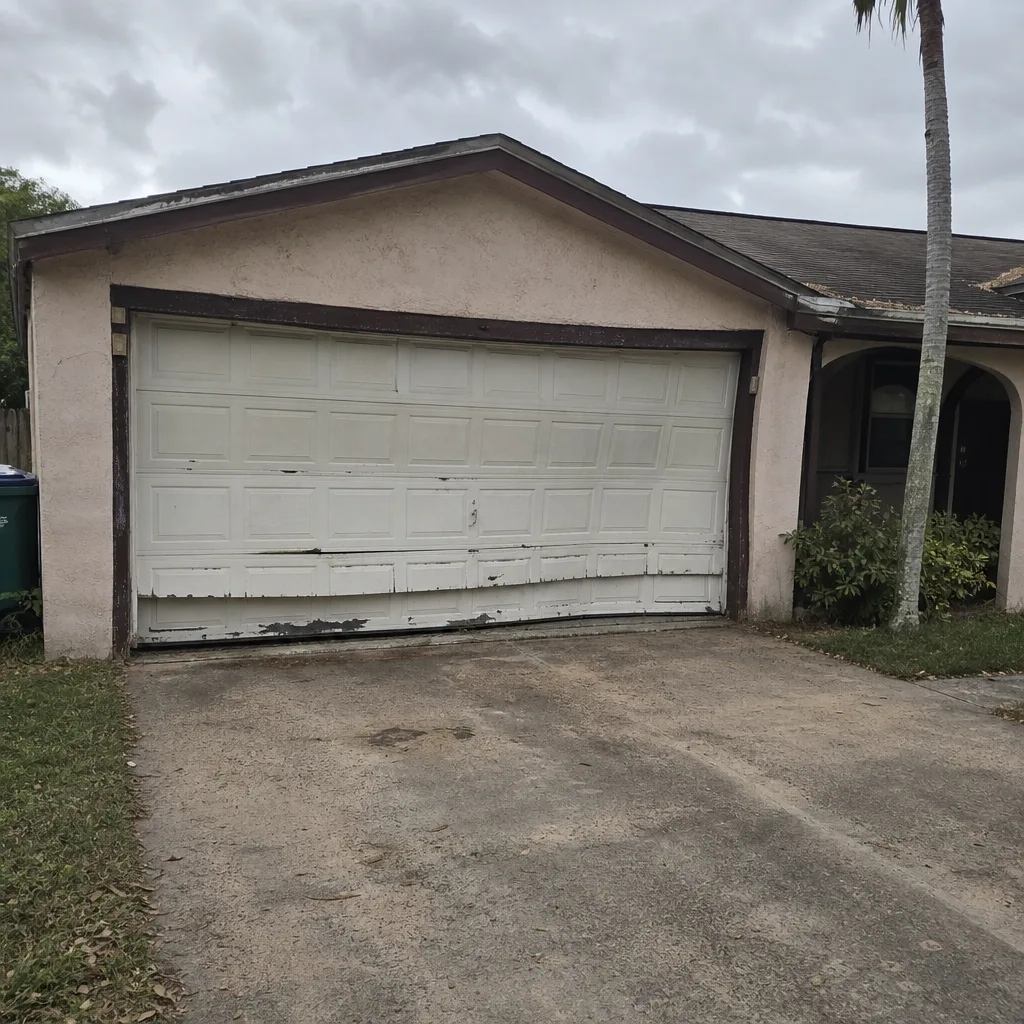 Before
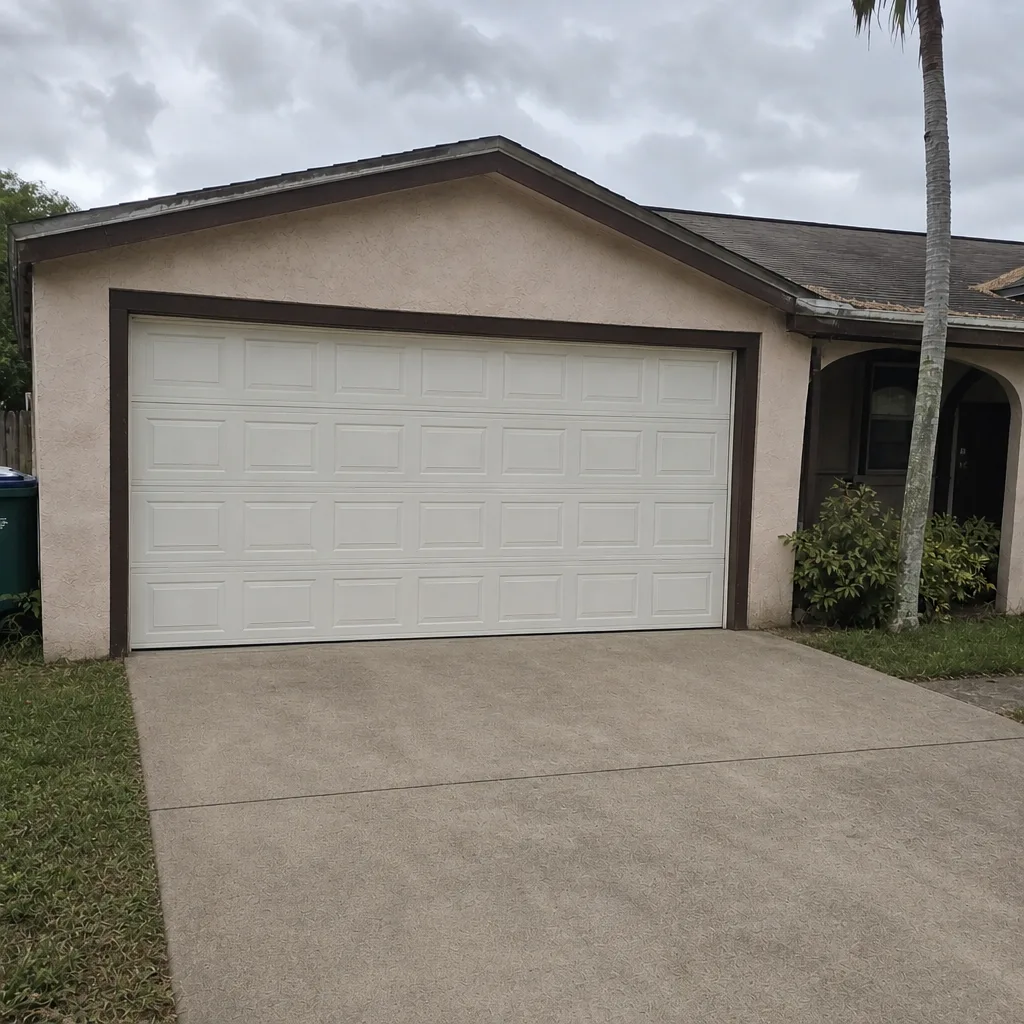 After
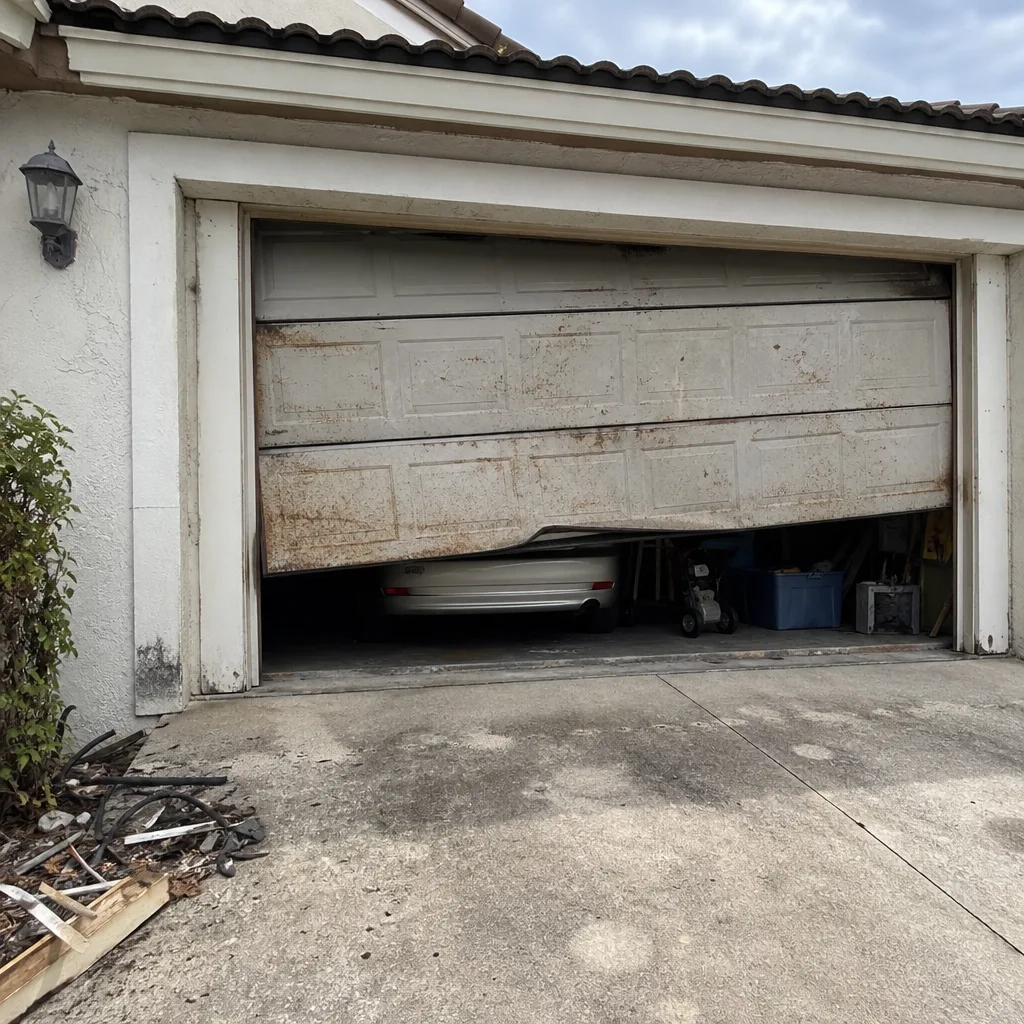 Before
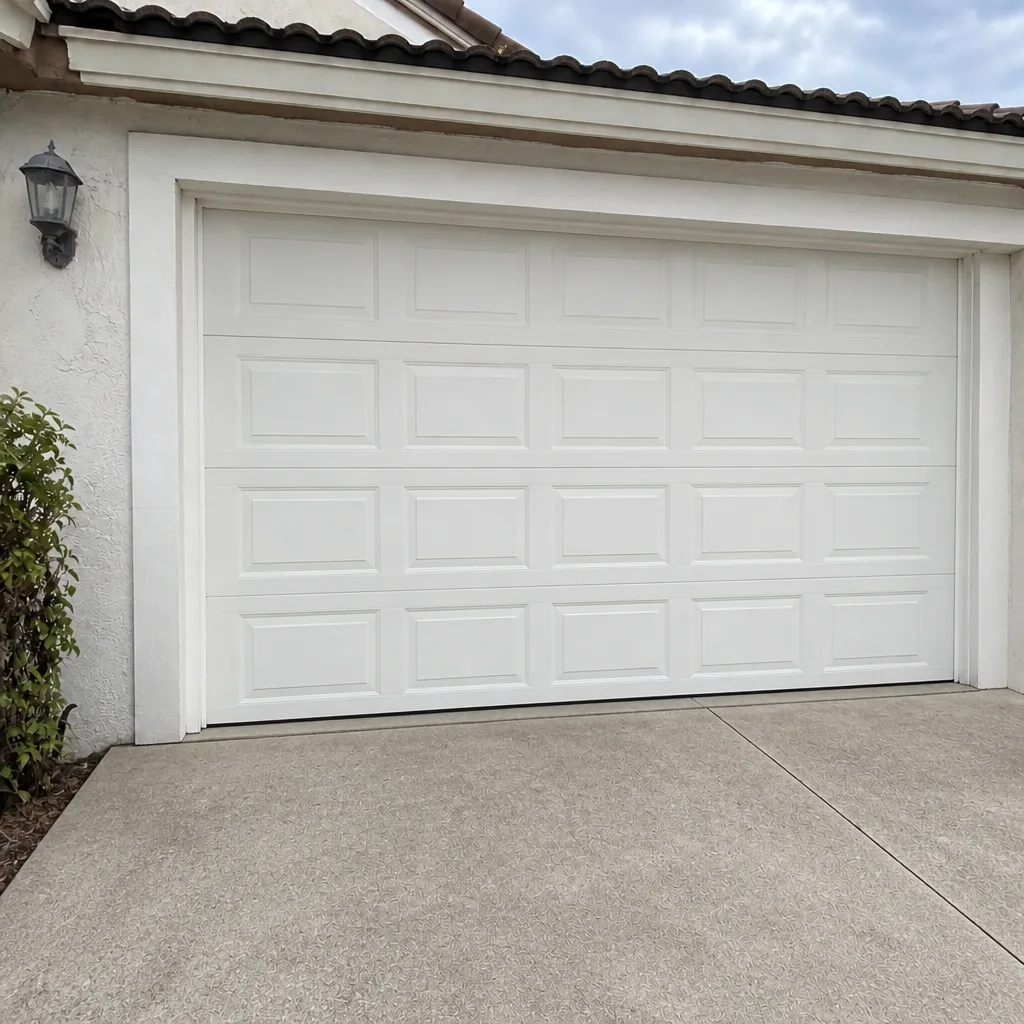 After
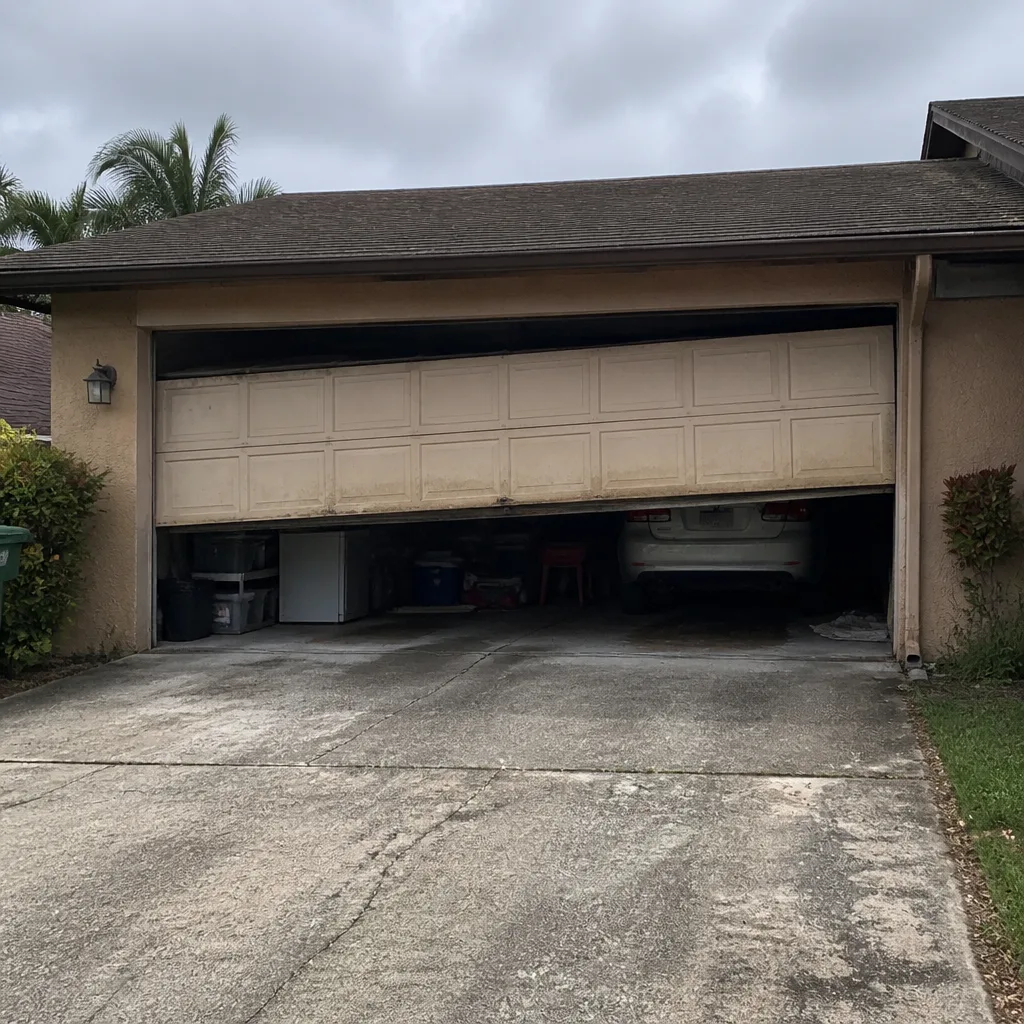 Before
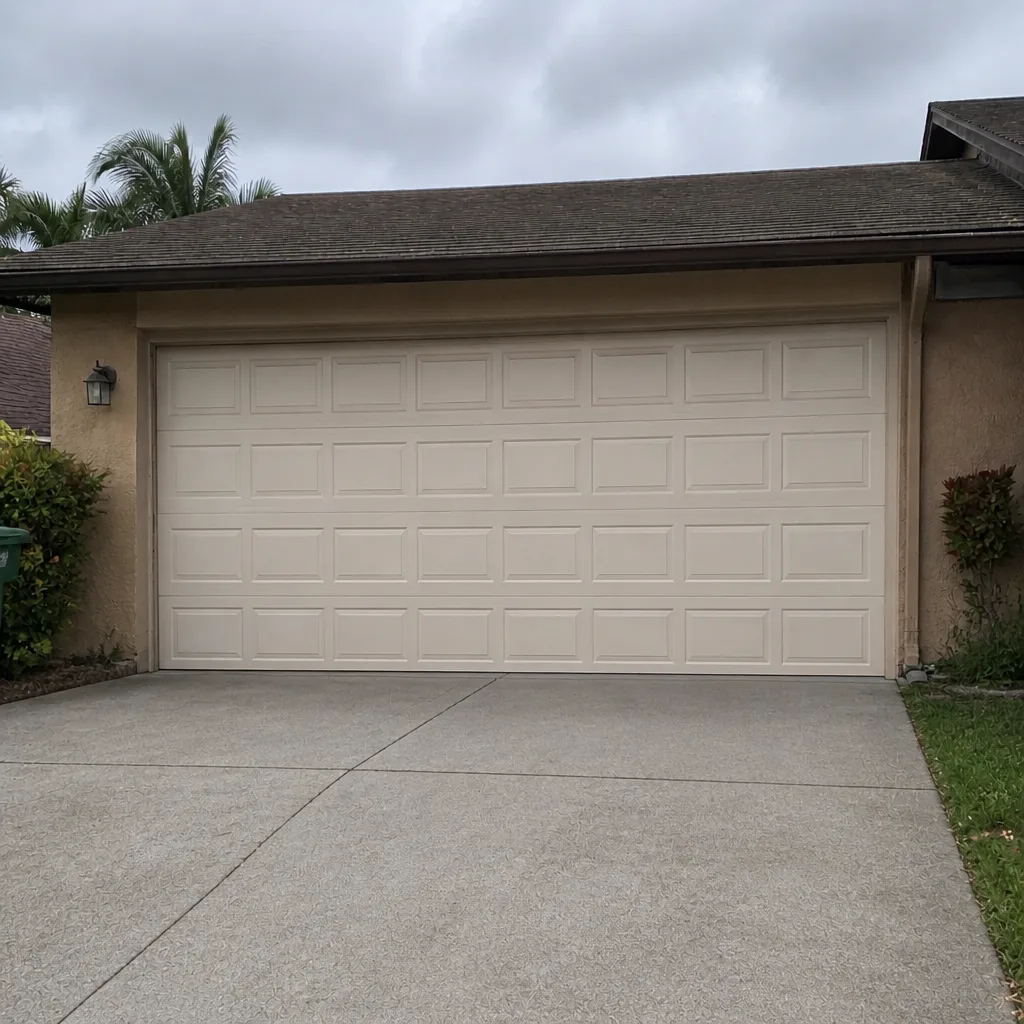 After
When to Call a Professional
Call a professional when the symptom involves stored energy (springs, cables, torsion hardware), when the door won’t open evenly or reverses mid-travel, when the opener runs but the door doesn’t move, or when anything in the wind-load chain – anchors, struts, tracks – looks compromised. Call sooner rather than later if the door is your main entry for vehicles or if you rely on it for security. On a replacement or new installation, call before you order anything, so the measurement, permit, and HOA questions are settled up front instead of after delivery. Pembroke Pines Garage Door Repair Pros offers free estimates in Pembroke Pines – call (844) 793-5158. Our technicians have up to 15 years of experience, work across the eight major residential brands including LiftMaster, Chamberlain, Genie, Clopay, Amarr, Wayne Dalton, Craftsman, and Raynor, and provide emergency service when a door failure needs attention outside the usual day.
Frequently Asked Questions
Yes, in most cases. Because the garage door is part of your home’s wind-load envelope, a replacement in Pembroke Pines is usually a permitted job that requires matching a compliant door and installation method to your home’s design pressure. The permit ties the product approval to your address and gives you a compliance record if the work is ever inspected or the home is sold. Ask your city’s building department to confirm the requirement for your specific address, and ask every installer in writing who is pulling the permit.
Storm-rated is a marketing phrase; wind-load-compliant is a technical claim. A compliant door has a Florida product approval matching the design pressure at your home, is installed with the anchors and reinforcement specified in the manufacturer’s instructions for that rating, and is documented by a permit. A door sold as “storm-rated” may or may not meet those three tests. The only reliable check is the paperwork – the product approval, the wind-load calculation, and the permit record.
Once a year is the right pace in our experience – faster than the manufacturer’s generic interval. South Florida’s humidity and salt-laden air accelerate corrosion on thin spring steel and cables well ahead of the schedule printed for a temperate climate. A yearly inspection catches surface rust, pitting, and the first sign of fraying before a failure. Springs and cables are dangerous to inspect closely yourself, so this is a job for a trained technician.
If you live in a community with architectural review – Chapel Trail, Pembroke Falls, and similar HOA-governed neighborhoods in Pembroke Pines – yes, in most cases. HOA architectural review is separate from the building permit, and many communities specify acceptable door styles, panel patterns, and colors. Submit a written architectural review request with product data and colors, and wait for written approval before you order. Verbal approval from a board member isn’t the same as a signed approval.
Usually yes. Opener problems like intermittent operation, misbehaving wall controls, reversed travel limits, and weak force settings are serviceable in most cases. Our technicians work across LiftMaster, Chamberlain, Genie, and Craftsman openers, and a proper diagnosis usually distinguishes a repair from a replacement in a single visit. If the opener is genuinely failing internally, we give you a written price for the replacement before any work begins so there are no surprises on the invoice.
Repair pricing depends on the specific failure, the part, and the door type, so we give a written estimate per job before work begins – that written price is what you pay. Spring, cable, opener, and panel repairs are quoted separately because the underlying work is different. Call (844) 793-5158 for a free estimate. Same-day service is usually available for urgent repairs when scheduling allows, and emergency service is available for failures outside the usual day.
The Bottom Line
Pembroke Pines garage doors live in a stricter, more humid environment than the national advice assumes. The decisions that matter most are compliance, installation, and maintenance – wind-load rating matched to your design pressure, correct anchors and reinforcement, the permit that documents both, HOA approval when your community requires it, and a yearly inspection that catches humidity-driven corrosion before it becomes a failure. Everything else – brand, style, opener features – is downstream of those four. Get them right and your door will do its job in this climate for a long time.
If you’re ready to move from reading to deciding, call Pembroke Pines Garage Door Repair Pros at (844) 793-5158 for a free estimate. Whether it’s a routine Pembroke Pines Garage Door Repair Pros assessment, a same-day repair, or a full replacement quote, we’ll give you the written price before any work starts, and you’ll know exactly what’s included – permit, anchors, and all.
Written by the team at Pembroke Pines Garage Door Repair Pros.