Last updated November 22, 2026
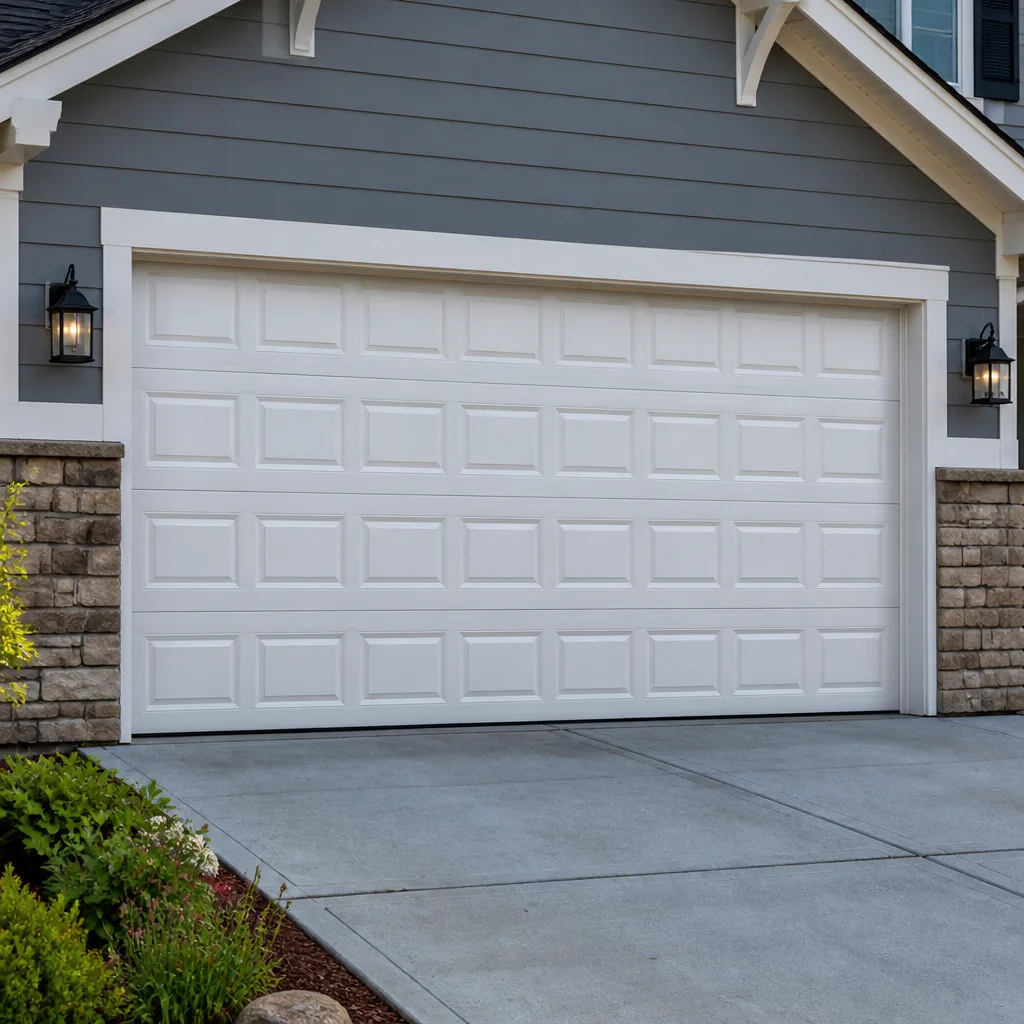 Raised-panel steel
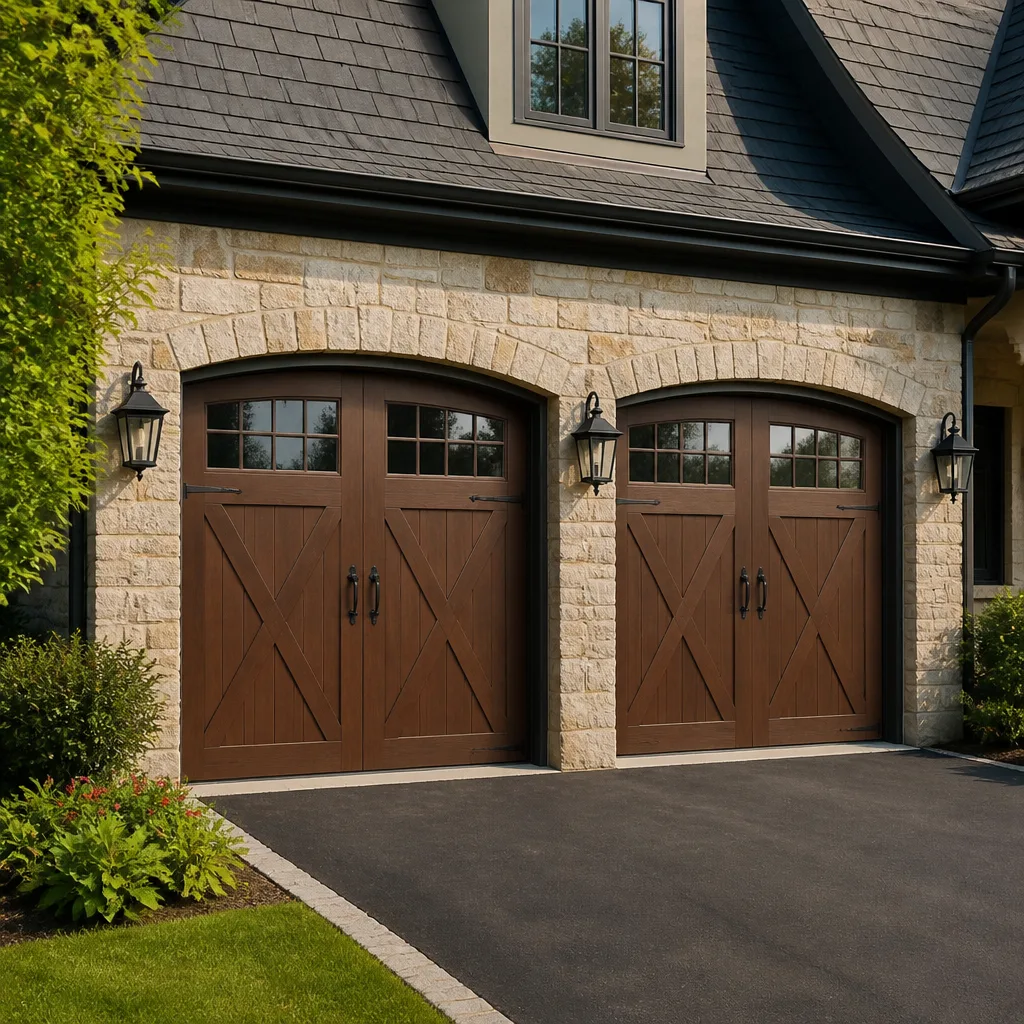 Carriage house
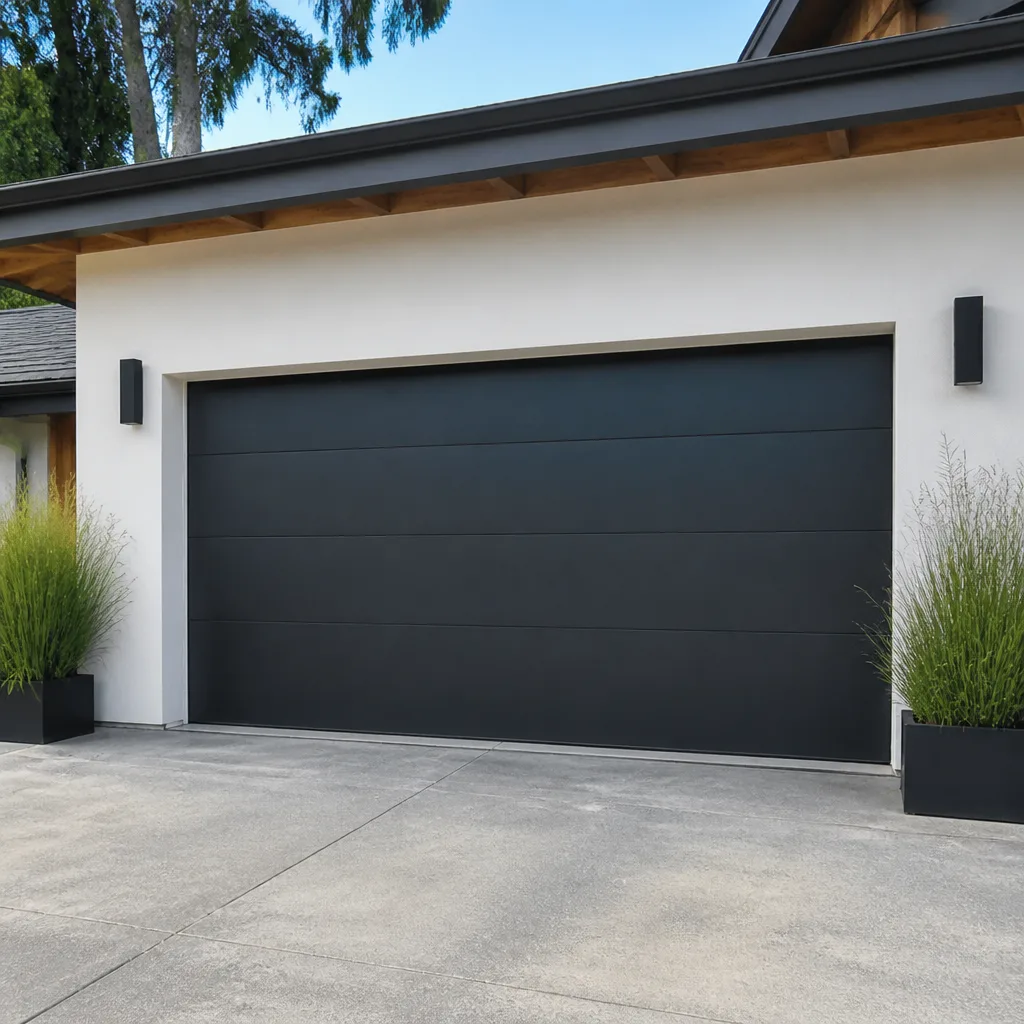 Modern flush
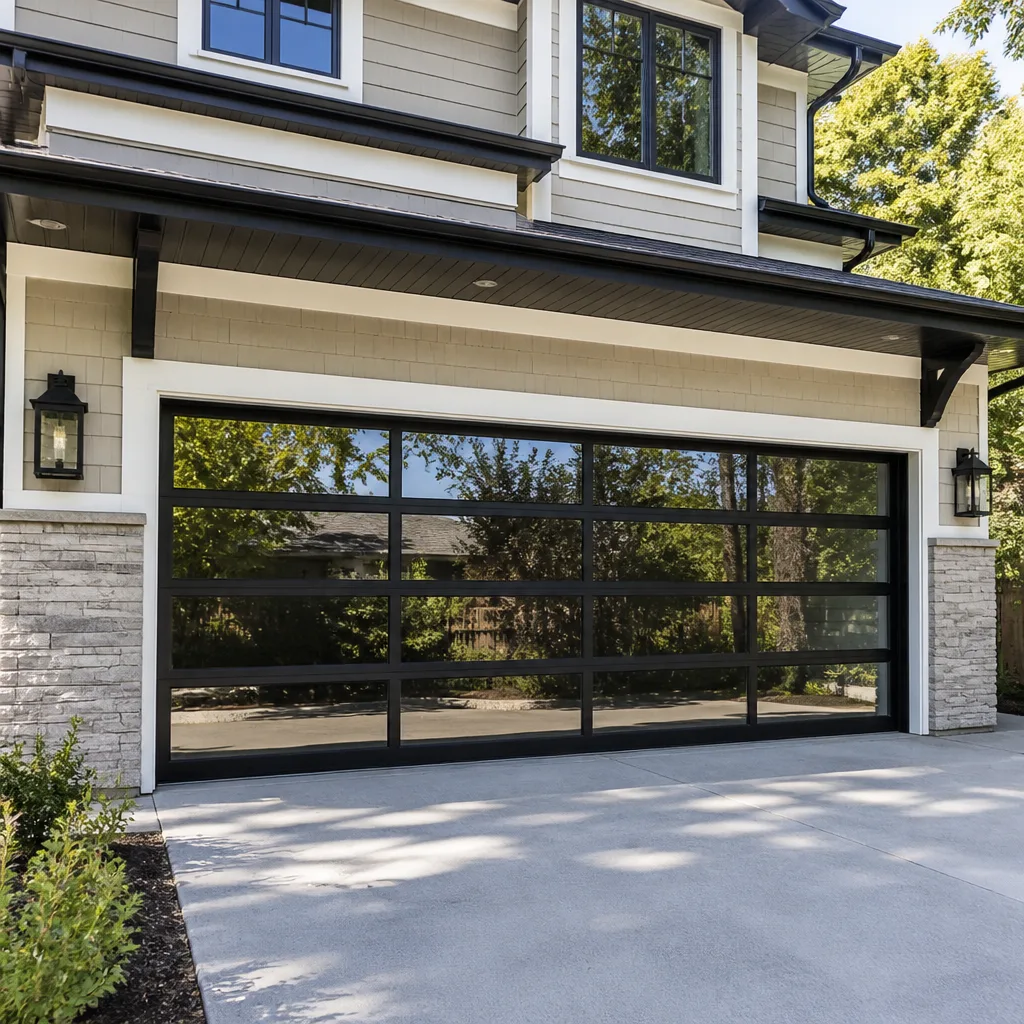 Full-view glass
 LiftMaster openers
 Chamberlain openers
Full 25-point door and opener safety check with every visit - springs, cables, rollers, tracks, and your LiftMaster or Chamberlain opener included
You get a price before we start. It does not change when the pro arrives.
Get your free estimateGarage Door Emergency Preparedness Guide for Pembroke Pines Homes
Most homeowners here think they have one emergency plan. They don’t. A snapped spring at 7 a.m. and a door that fails while a hurricane band pushes through are two different problems with two different answers. One strands your car. The other opens a hole in the shell of your house. Preparing for the first teaches you almost nothing about surviving the second, and mixing them up is where people get hurt. In this guide we separate the two plans, walk through the manual release on the openers we see most in Pembroke Pines, and give you a pre-storm checklist you can run in under ten minutes.
Quick Answer
A garage door emergency in Pembroke Pines comes in two types: a mechanical failure (spring, cable, opener, or track), which you handle by pulling the manual release and calling for repair, and a storm failure, which you handle by keeping the door closed and reinforced so it doesn’t breach during wind. Never open your door during a hurricane to “equalize pressure.” Stay inside, keep the door down, and call for help if the door is compromised.
Styles & brands we work with
- Raised-panel steel
- Carriage house
- Modern flush
- Full-view glass
- LiftMaster openers
- Chamberlain openers
Table of Contents
- Why Pembroke Pines Homes Face Two Kinds of Garage Door Emergencies
- How the Manual Disconnect Works on the Big Five Opener Brands
- What to Do When the Power Goes Out
- The Storm Protocol: Door Down, Door Reinforced, Door Left Alone
- Why Opening Your Door During a Hurricane Is a Myth That Kills People
- How to Describe Your Failure to a Dispatcher So the Right Technician Arrives
- Pre-Storm Hardware Verification Checklist (Under 10 Minutes)
- When to Call a Professional
Why Pembroke Pines Homes Face Two Kinds of Garage Door Emergencies
In most of the country, a garage door failure is purely mechanical. Here it’s mechanical and weather-driven. Pembroke Pines sits well inland enough that you don’t see the wind-driven surge problems, but the Broward County storm season still brings sustained wind and driving rain that a garage door was never built to shrug off without help. That means your emergency plan has to cover two questions that look nothing alike:
- Mechanical failure: a spring snaps, an opener dies, a cable unwinds, a track bends. The door is immobile or dangerous to operate. You need repair, and you need to know how to release the door safely.
- Storm failure: wind load and debris push on the door while it’s closed. Your concern isn’t getting the car out; it’s keeping the door in its opening so the pressure doesn’t blow into your house.
The mistake we see most often is treating both with the same instinct. Mechanical failure gets the “get it open” instinct. Storm failure needs the “keep it shut” instinct. If you apply one to the other, you either leave your car trapped when you didn’t have to, or you put your home in real danger during a storm. Our Pembroke Pines Garage Door Repair Pros page is a good place to start if you’re not sure which type of failure you’re looking at. Serving eight of the most widely installed opener and door brands means we usually know your system before we arrive.
How the Manual Disconnect Works on the Big Five Opener Brands
The manual release cord is your single most important piece of emergency hardware, and less than half the homeowners we talk to can find it without looking. It’s the red handle hanging from the trolley, usually dangling about six feet up, right behind the door’s top panel. Pulling it disconnects the opener from the door so you can lift the door by hand. Here’s how it works across the brands you’re most likely to find in a Pembroke Pines garage.
General operation sequence
- Make sure the door is fully closed and nobody is standing under it.
- Find the red release handle on the trolley, the sliding carriage on the opener rail.
- Pull the cord straight down toward the floor, one firm pull. You should feel it detach.
- Lift the door by hand, using the bottom panel’s handle, until it’s fully open.
- The door should stay up on its own. If it won’t, do not let go. Something is wrong and the door needs a technician before anyone walks under it.
Re-engagement by brand
- LiftMaster and Chamberlain: the trolley is engaged by pushing the door closed by hand until you hear it click back into the opener carriage. Then run the opener once to confirm it re-latches.
- Craftsman: the trolley re-engages the same way, with a firm hand-pushed closure. Watch the trolley as it engages; if the door slides back open, it hasn’t caught and you should call us.
- Genie: many Genie models re-engage with a small lever or slide on the trolley itself. Flip the lever, then operate the opener to test.
- Raynor: re-engagement depends on the opener model mounted to it. Look at the trolley carriage; on most, pushing the door closed re-latches it, but confirm with our team if it feels loose after re-engagement.
If the release cord won’t pull or the trolley won’t re-engage, don’t force it. Call us and we’ll walk you through it or send a technician. A stuck release is a sign of a dry or damaged trolley, not something to solve with more pull.
What to Do When the Power Goes Out
When Pembroke Pines loses power after a storm, the first call we get is usually from a homeowner who can’t get their car out of the garage. The answer is simple once you know it: the manual release cord works without electricity. Pull it, lift the door by hand, and you’re mobile again. What’s less simple is what to do next, and what your options are for the future.
Battery backup options
Most modern openers from LiftMaster, Chamberlain, and Genie can be fitted with a battery backup that lifts the door a limited number of times when power is out. Common setups will give you a handful of cycles, not unlimited use. In Florida heat, backup batteries age faster, so a battery that worked fine two storm seasons ago may not hold a charge now. Test yours before a storm system approaches, not during one. We can check and replace the backup during any opener repair visit.
Manual operation sequence during an outage
- Confirm the opener is dead (lights off, no motor sound).
- Pull the manual release cord as above.
- Lift the door by hand from the bottom panel and prop it if you need it open for a while.
- Don’t leave the door half-open for extended periods; it can warp vulnerable panels under heat.
- When power returns, re-engage the trolley before running the opener again.
If your opener has no backup and you want one before the next season, call (844) 793-5158 for a free estimate on a battery backup install. We work on the equipment you already have, which makes it a much easier job than a full replacement.
The Storm Protocol: Door Down, Door Reinforced, Door Left Alone
During an active storm in Pembroke Pines, your garage door is either an asset or the weakest point in your home’s envelope. The general rule is this: the door stays closed. Below is when to leave it down, when to brace it, and when it’s already compromised.
- Leave it down (the default): a properly closed garage door locks into its track and resists wind better than an open one ever could. Don’t open it to check the weather or to grab something from the car.
- Brace or reinforce it (when you’ve done it before the storm): vertical bracing kits and commercially available door-reinforcement systems are installed ahead of time, not during the storm. If you don’t have a kit installed, don’t try to improvise one with boards during the wind.
- If the door is damaged or lifted off its track during the storm: don’t try to fix it in the wind. Stay away from the opening, move to an interior room away from the garage wall, and wait for the storm to pass before you assess or call.
Pre-storm hardware verification
If a hurricane is on the way, the ten minutes you spend on your door before it arrives are worth more than any amount of heroics during it. The three most common storm-failure points are the bottom seal (water and wind get under it), the hinges (loose screws mean the panels shift), and the track (dents and bends concentrate load on one edge). Check all three before a watch becomes a warning.
Why Opening Your Door During a Hurricane Is a Myth That Kills People
You may have heard that opening your garage door during a hurricane “equalizes pressure” and protects the house. That is not true, and it’s a dangerous idea. A garage door is one of the largest openings in any home, and opening it during high wind gives the storm a direct line to lift, twist, and remove panels. Worse, once a panel lets go, the pressure changes inside the house and other openings like windows and the roof can fail in sequence.
The building-science reality is that your home is designed to resist wind with all openings closed. Wind-driven pressure on a closed structure is something your walls, roof, and door are meant to handle. Opening one allows the pressure to push in a way no house is built for. If you’ve heard the “open the door” advice from a neighbor, understand it’s the wrong advice. Keep the door down.
If you have a garage door that is already damaged, has loose panels, or shows sagging before a storm arrives, that’s the moment to call us for a repair assessment. A door that can’t stay down through wind isn’t a door you want between you and a storm.
How to Describe Your Failure to a Dispatcher So the Right Technician Arrives
The single biggest reason an emergency garage door call takes longer than it should is that the homeowner can’t describe what happened. “My door won’t work” could mean four different problems and requires four different parts. Here’s how to triage before you call Pembroke Pines Garage Door Repair Pros.
What to note before you dial
- What’s the door doing? Fully stuck, opens a few inches and reverses, opens halfway and stops, or opens but won’t close?
- What do you hear? A snap when it failed (spring), grinding (opener gear), a click but no movement (circuit or safety sensor), or silence (power or motor)?
- Where is it stuck? Which position on the track, and can you see a bent panel or a hanging cable?
- What brand? Check the opener and the door. LiftMaster, Chamberlain, Genie, Craftsman, Raynor, Clopay, Amarr, and Wayne Dalton cover most homes here.
- Is anything hanging? A dangling cable or disconnected spring means the door is dangerous to operate. Tell the dispatcher immediately.
What to say when you call
A good triage call sounds like this: “LiftMaster opener, door opened about two feet and stopped. I heard a loud snap before it happened. There’s a cable hanging loose on the left side.” That one sentence tells us the likely diagnosis (spring failure), the safety concern (hanging cable), and the opener brand (so the right parts are on the visit). Same-day emergency response goes to the address that gave the clearest picture. Our garage door repair team handles spring and cable failures under the same visit. When the door itself is the issue rather than the opener, garage door opener repair is the page that matches that call. Emergency dispatch runs from 7am to 7pm, and we handle calls outside standard business hours for urgent failures.
Pre-Storm Hardware Verification Checklist (Under 10 Minutes)
Run this before any named storm gets close to Pembroke Pines. Ten minutes, one flashlight, no tools except a screwdriver for the loose-hinge check.
- Test the manual release. Pull the red cord with the door closed, lift the door halfway by hand, then re-engage. You’re confirming the release works and the door moves freely.
- Check the bottom seal. Run your hand along the bottom. Cracks, gaps, or hard seals mean water and wind will find a way under. A worn seal is a cheap replacement and an easy self-check.
- Inspect the hinges. Look at every hinge on the door. Loose screws back out. Tighten them now, not during the storm.
- Look at the track. A bent or dented track concentrates load on that edge. Any visible kink is a reason to call before the storm, not after.
- Test the balance. Disconnect the opener, lift the door halfway, and let go. It should stay roughly in place. If it falls or shoots up, the springs are out of balance and the door is a storm liability.
- Confirm the safety sensors. Wave something across the photo-eye beam. If the door doesn’t reverse, the sensor is misaligned or dirty.
- Test the battery backup (if you have one). Pull the opener’s power plug and run the door once. If it doesn’t lift, the battery needs replacement before the storm season.
If any of those checks fails, don’t wait for the storm to announce itself. Call us for a repair visit before the season tightens up. For a full installation or replacement (not just a repair), our garage door installation team can measure, order, and schedule in proper sequence so the door is ready when the storm is. Our technicians have up to 15 years of experience across the eight major brands we service, so the check is thorough rather than a quick visual.
Common Mistakes to Avoid
- Opening the door during a hurricane to “equalize pressure.” This is the most dangerous mistake in the list. Keep the door closed. Wind-driven pressure on a closed house is what the structure is built for; an open door turns the garage into a wind tunnel.
- Forcing a door that’s stuck with a hanging cable or snapped spring. A high-tension spring under load can cause serious injury if it releases while you’re pulling on it. Stop, don’t force it, and call a trained technician.
- Assuming the manual release will “just work” when you need it. A Cord that hasn’t been pulled in years can seize on the trolley. Test it once a season so it moves freely when the power is out.
- Skipping the balance check before storm season. A door that’s out of balance today can become a door that blows off its track tomorrow. Ten seconds of testing tells you whether to call now or later.
- Calling for a repair with no information about the failure. “It’s broken” costs you a scheduled visit because the technician doesn’t know what to bring. Run through the triage questions before dialing so the right technician arrives on the first visit.
- Trusting an old battery backup to still work in July heat. Backup batteries lose capacity in Florida heat. Test them in the spring, not during the first outage.
- Letting a single-brand technician push you toward replacement. A brand-locked tech only has one door option and one diagnosis. Ask for a brand-independent assessment before you spend on a full replacement.
See the difference
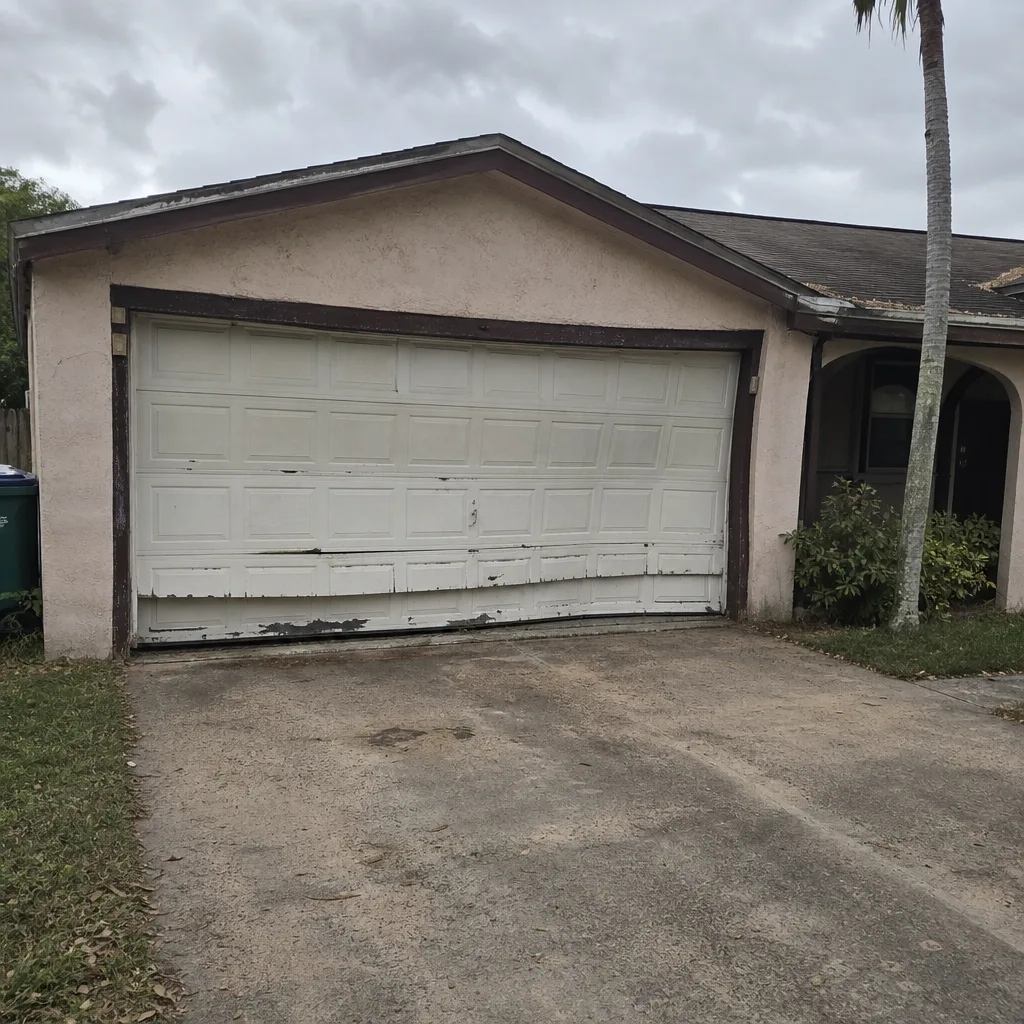 Before
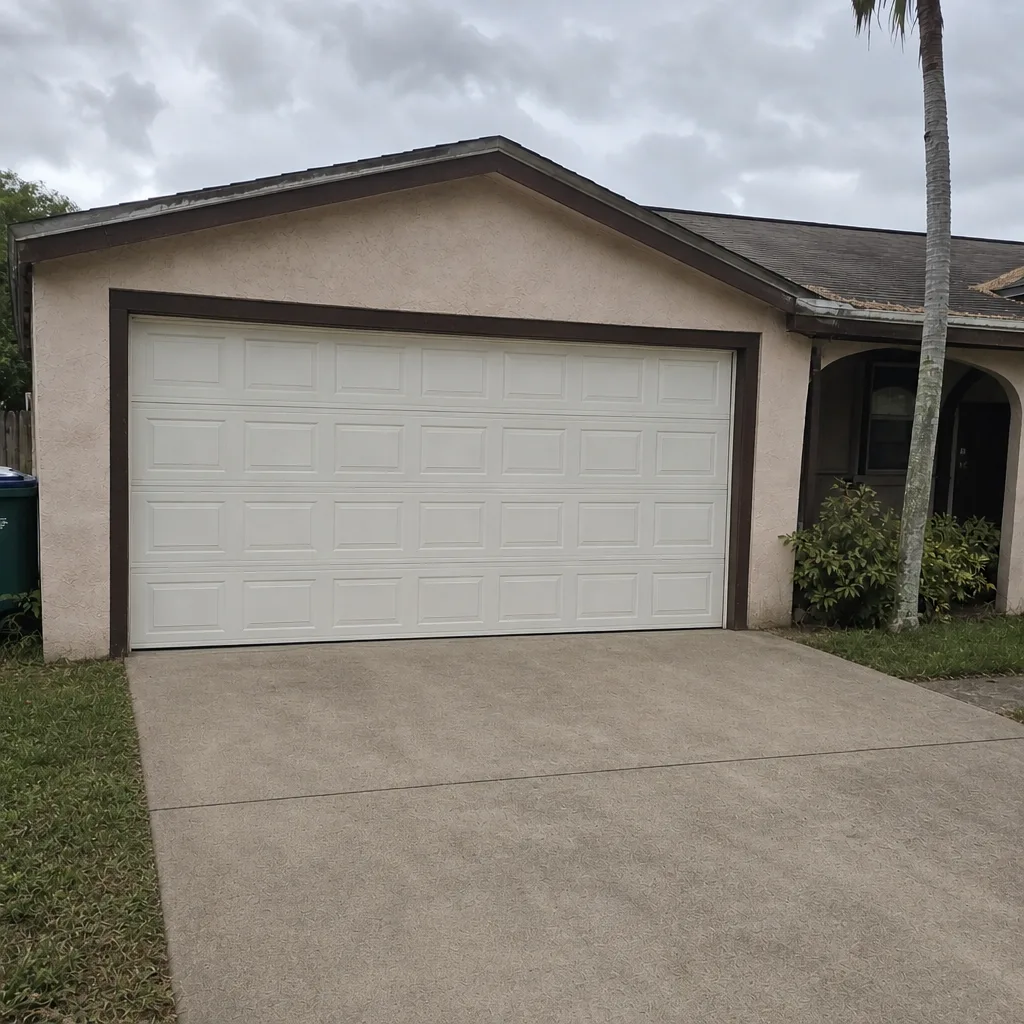 After
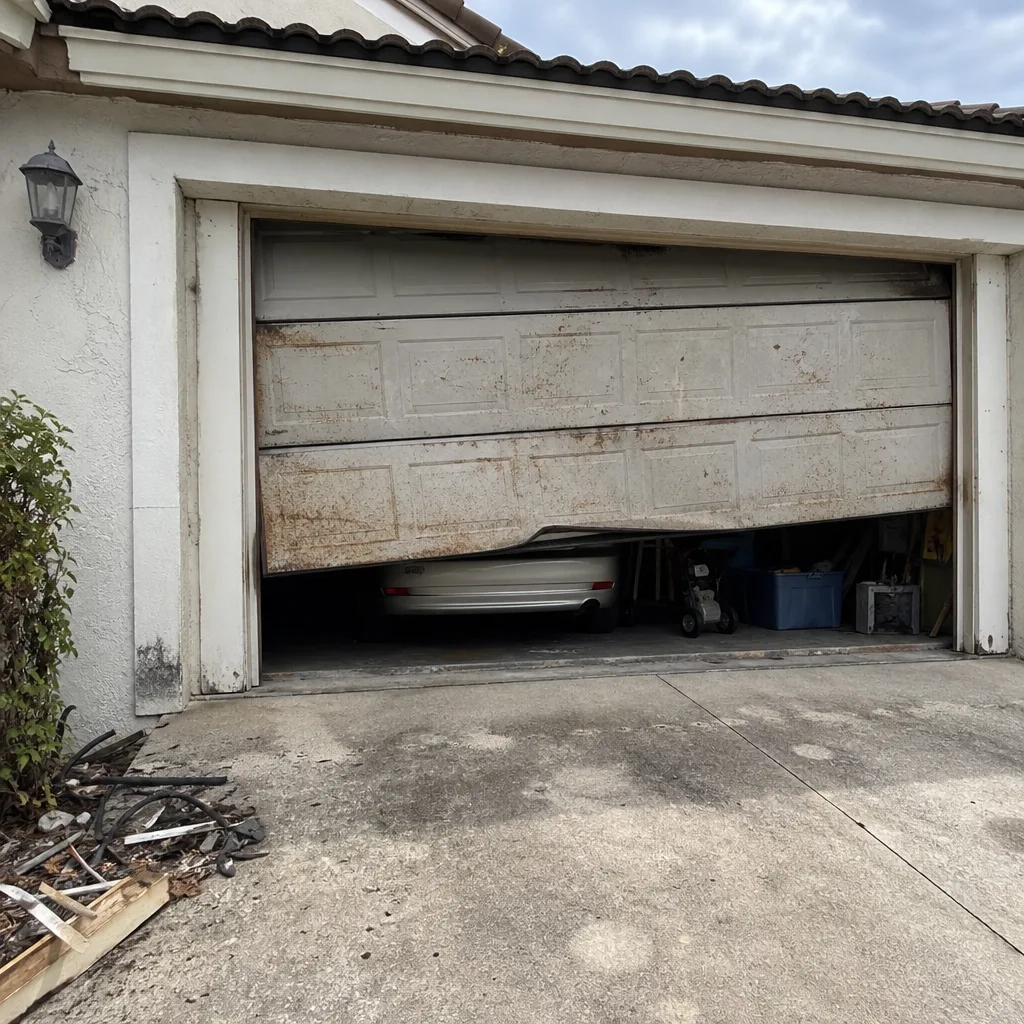 Before
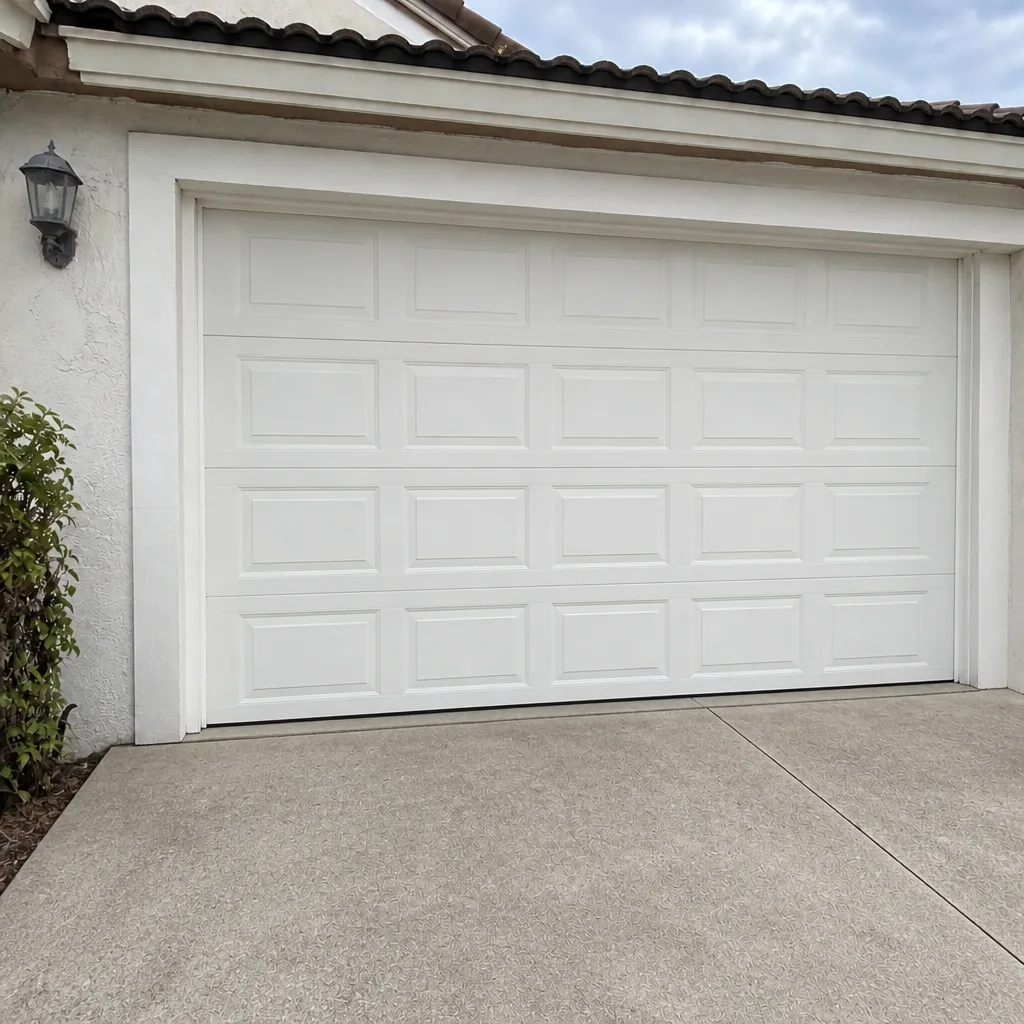 After
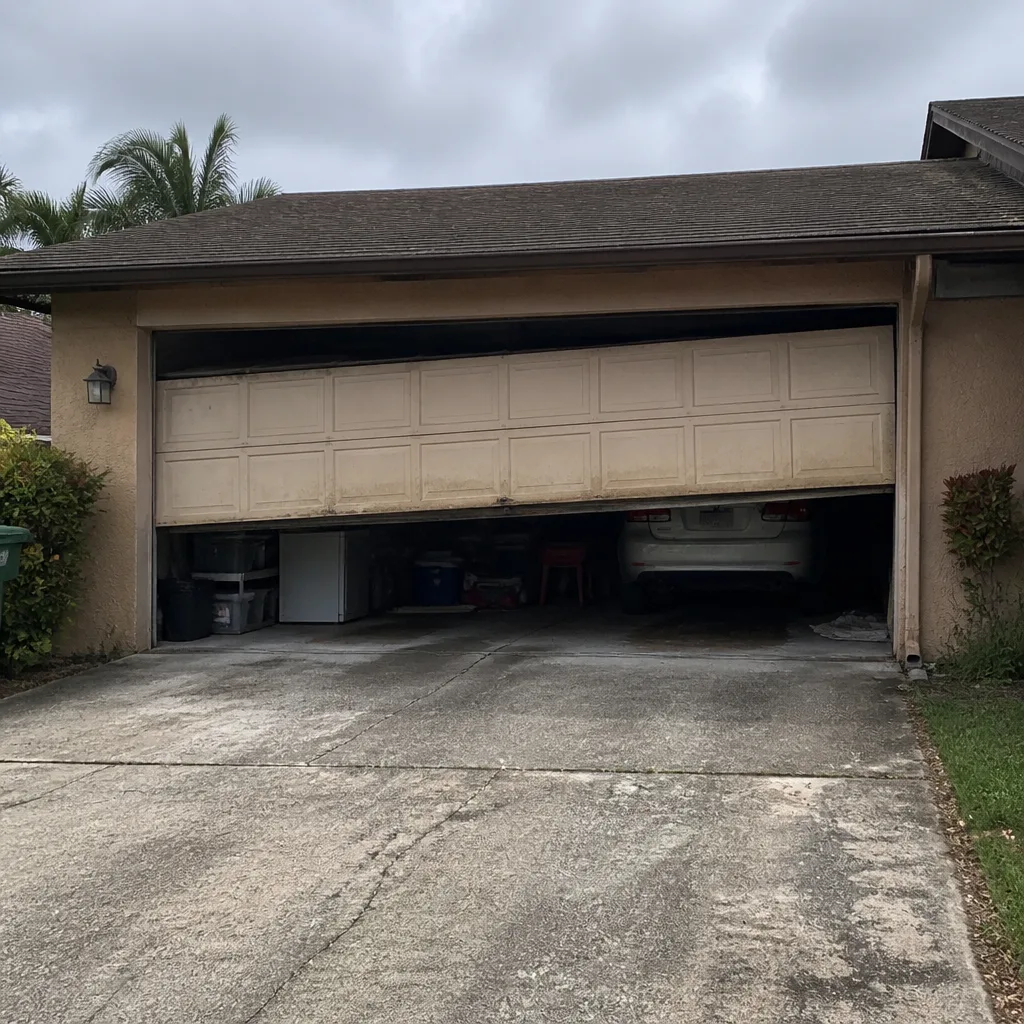 Before
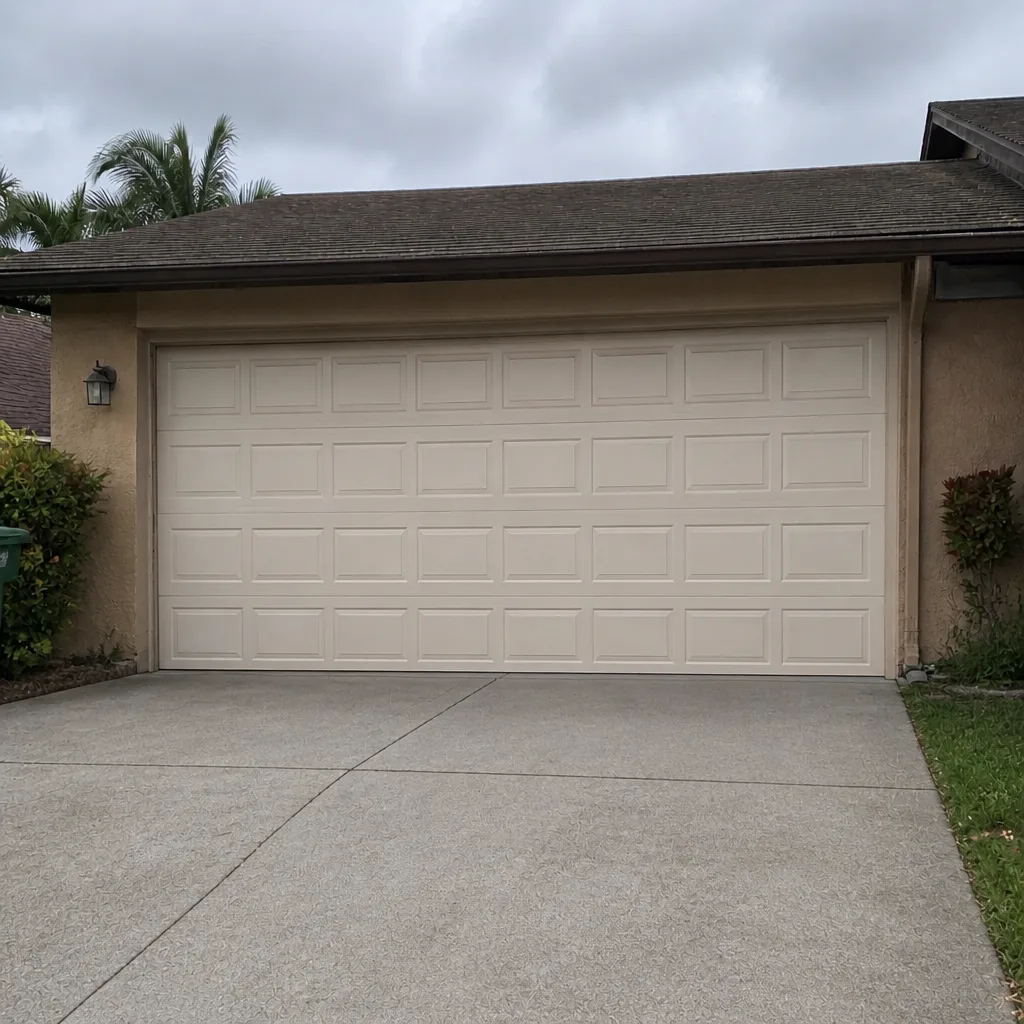 After
When to Call a Professional
Call us when the failure involves a spring, cable, or track damage; when you smell burning from the opener; when the door is visibly off its track or won’t stay balanced; when the manual release won’t pull or the trolley won’t re-engage; or when a storm has left the door damaged or lifted. These are the cases where attempted DIY work causes injury or makes the repair more expensive. For storm-related damage, don’t operate the door at all until a technician has assessed it. We offer free estimates in Pembroke Pines, and we quote and agree on the price before any work starts.
Frequently Asked Questions
Check whether the opener has power (lights, motor sound) and whether the manual release cord has already been pulled. If there’s no power, pull the release and lift the door by hand. If the opener runs but the door won’t move, the trolley may be disengaged or the spring may have failed; call us. Call (844) 793-5158 for an exact quote; estimates are free.
Backup batteries in Florida heat lose capacity faster than in cooler climates, so we recommend testing yours each spring and replacing it when it won’t lift the door under a no-power test. The number of lifts you get from a fresh battery depends on the door’s weight and the opener model. We can check and replace the battery during any service visit.
No. Opening your door during a hurricane is a myth that increases the risk of losing panels and letting wind into your home. Keep the door down and reinforced. If wind-driven damage has already compromised the door, stay away from the opening and wait for the storm to pass before calling.
Most openers re-engage when you push the door closed by hand until the trolley clicks back into the carriage. Craftsman and LiftMaster models usually work this way; Genie often has a small lever on the trolley you flip. Run the opener once to confirm the connection before operating normally.
In most urgent cases, yes. Same-day repair is available, and emergency service covers urgent failures outside standard business hours. Dispatch runs from 7am to 7pm, and the more detail you give us on the call, the faster we can get the right parts to you. Call (844) 793-5158; estimates are free.
The balance of the door, the bottom seal, the hinges, the track, the safety sensors, the manual release cord, and the battery backup if you have one. Any failure in those checks is a reason to call for a repair before the storm arrives. Our team handles brand-specific repairs across eight major brands, so the visit is efficient.
The Bottom Line
Pembroke Pines homeowners need two preparedness plans, not one. For mechanical failure, know where the release cord is, know how to re-engage the trolley on your specific opener, and know how to describe the problem when you call. For storm failure, keep the door down, check the three storm-failure points (seal, hinges, track) before the season, and ignore the pressure-equalizing myth. Every route ends the same way: when something isn’t right, call a trained technician before you force anything. Same-day repair, emergency service, and brand-independent assessment are what keep your door in service and your home intact through both kinds of emergency.
Contact Us for Emergency Preparedness and Repair
If your door is stuck, off-track, or has a spring or cable problem, don’t wait it out. Call (844) 793-5158 for a free estimate. We’ll quote and agree on a price before any work starts, and we’ll recommend a brand-appropriate repair rather than a replacement. Emergency service runs alongside our free estimates in Pembroke Pines so you’re not left waiting when the door has to work.
Written by the team at Pembroke Pines Garage Door Repair Pros.